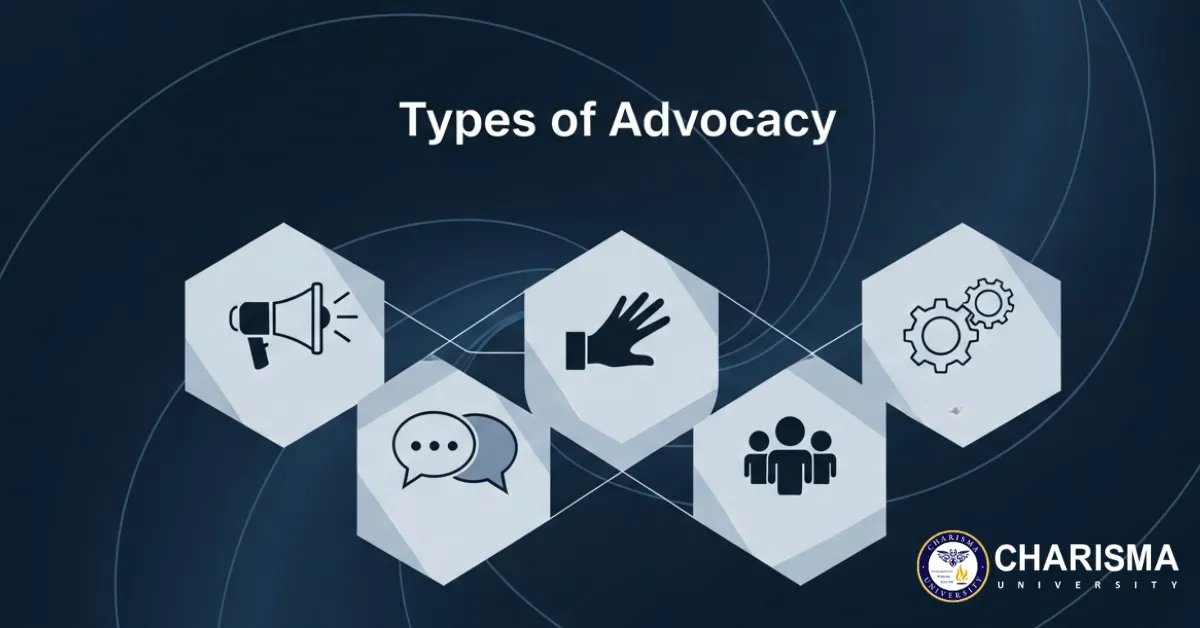
Advocacy comes in many forms, but most are grouped in 3 categories, and within these categories, there are around 13 widely recognized types. Some are focused on solely helping people, while others are focused on influencing communities or public policies.
According to various studies, advocacy organizations operate in over 100 countries, helping millions of people access healthcare and education. Additionally, such organizations have also contributed to major reforms around the globe.
Regardless of their contributions, these advocacy organizations operate differently and address different situations and needs.
To gain a better understanding of the forms of advocacy, we’ll be going through why understanding their types is important, the core principles, the key forms of advocacy, and the impact they have on society.
Why Understanding Different Types of Advocacy is Essential
In advocacy, you won’t just randomly speak and address issues, you’ll be addressing them in the right place and at the right time. Different issues require different advocacy approaches, whether it involves an individual or pushing for a positive change for the entire community.
Improves Understanding Of Social Issues
You’ll gain deeper insight into how social challenges operate at both individual and social levels. It will also allow you to see how various factors influence problems within society.
Identifies the Right Advocacy Approach
Not every situation requires the same approach. You need to figure out which approach is the best for a particular situation and match your advocacy campaign based on the nature of the problem.
Strengthens Ability to Support Others
Once you understand how advocacy works in different forms, you’ll be better equipped to support individuals and communities facing challenges. You’ll also be providing guidance and assistance in ways that truly address the needs of others.
Encourages Greater Civic Awareness
Advocacy will inspire you to be more involved in civic matters. When you notice how advocacy contributes to change, then you’re more likely to engage in community discussions and initiatives.
Contributes To Effective Change
Knowledge of advocacy methods will help you approach change in a more strategic way. You’ll apply suitable methods when addressing social concerns. In the end, your efforts become more capable of creating long-term impact.
Principles Of Advocacy
Your advocacy campaign works best when it is guided by clear values that keep the focus on fairness and the needs of the people. Without them, your campaign can either lose direction or silence the very same voices you’re trying to uplift.
Empowerment
You won’t be making decisions for them, you’ll be supporting them in understanding their rights and choices. The goal is to strengthen a person’s voice so they can participate actively in decisions that affect their lives.
Equality
This is for ensuring that everyone is treated with fairness and respect, regardless of their circumstances. Advocacy works to remove obstacles preventing individuals from accessing services. By promoting equality, you’ll create environments where everyone has the same chance to be heard.
Transparency
Meaning that you’ll be more open and honest in your actions and intentions during advocacy work. People should clearly understand what steps you’re taking on their behalf and why certain decisions are made, so you can build trust between the people you’re working for and your advocate members.
Accountability
As an advocate, you must take full responsibility for your actions and decisions while acting in the best interest of the individuals or communities you represent. This helps to maintain ethical standards and protect the integrity of advocacy efforts.
Independence
Your advocacy campaign should remain free from outside influence that could compromise equality. You must always prioritise the needs and rights of the people rather than external pressures or personal interests.
Key Forms Of Advocacy
There are different types of advocacy, and each one serves a different purpose. The purposes revolve around supporting one individual to influencing larger systems that affect many people. Understanding these types will help you choose the right approach to create meaningful and lasting change.
Individual Based
The advocacies under this category focus on supporting people directly and personally, often through shared experiences or one-on-one conversations, and help individuals overcome challenges in their daily lives.
- Self-Advocacy
This is where you speak up about your own needs, encouraging yourself to be independent and confident to overcome obstacles in your life. It involves communicating concerns clearly and understanding one’s own rights.
Examples
- An office worker requesting WFH (work from home) or a remote job to manage health needs.
- A student with disabilities informs teachers about his learning strengths & weaknesses.
- Stating your preferences regarding certain activities instead of following the herd.
- Peer Advocacy
This is where you’ll be supporting those individuals who are living or have gone through a similar situation to yours. First, you’ll understand the challenges, then provide practical advice and emotional support.
Examples
- School or college seniors helping freshmen to adjust to their campus life.
- A group for mental health support where people give lessons and guide one another.
- Recovery programs where former addicts help those who are going through rehabilitation.
- Citizen Advocacy
It involves a couple of people from the community who support those who may be vulnerable. They’ll voluntarily do one-on-one sessions and form a solid relationship, especially with those suffering from intellectual disabilities, as they’re often neglected.
Examples
- You can volunteer to help a couple of elderly folks walk through healthcare services.
- Assisting folks with disabilities in getting them employed.
- A local assisting a person who’s facing discrimination when accessing community resources.
- Case Advocacy
This one involves helping folks resolve a specific problem by guiding them. You’ll work closely with the person who brought up the issue, search for solutions, and connect them with someone who can take care of it.
Examples
- A social worker who assists a family to secure housing assistance.
- A manager who helps someone file a case who has been wronged.
- A campus counsellor assists students in obtaining financial aid for their education.
- Crisis Advocacy
It occurs during emergencies or catastrophic events where people need urgent support. You’ll help people defend their rights and access emergency resources during a chaotic event. The focus is on stabilising the situation while making sure that people receive all the help they can get.
Examples
- Assisting the victims of domestic violence in finding shelters.
- Accompanying someone to the hospital and making sure they’re treated.
- Assisting a homeless person in finding emergency shelter during extreme weather.
Systems-based
This category focuses on the larger structures that shape society, such as laws, institutions, and governance systems. So basically, your entire focus is going to be on the root cause that affects a huge amount of people and reform policies efforts to promote fairness and accountability.
- Systems Advocacy
They’re mainly focused on changing the policies or procedures that affect large groups of people. You’ll be identifying flaws in the system and pushing for necessary improvements so their policies can be fair and just.
Examples
- Focusing on healthcare policies to make sure that treatment is affordable.
- Aiming at educational institutions to make special policies for students with disabilities.
- Working with organisations to make public transport more visible.
- Class Advocacy
This one is all about the power of numbers, where you’ll be working for the interests of a specific group of people that share similar challenges and find solutions that are beneficial for their entire group.
Examples
- A group of labourers advocating for fair treatment and better wages.
- University or college-going students advocating for improved campus facilities and a reduction in tuition fees.
- A group of nurses advocating for limiting the number of patients assigned to them.
- Legislative Advocacy
Over here, you’ll be making efforts to influence lawmakers and government officials to create, revoke or make minor changes to the law for the well-being of the people. You’ll be researching, organising campaigns, and convincing the policymakers.
Examples
- Convincing lawmakers to make stronger environmental protection laws against climate change.
- Passing a law that supports mental health services.
- Presenting data on water contamination to governmental officials and placing a ban on waste disposal.
- Legal/Statutory Advocacy
This is where you’ll be using the law to challenge unfair policies. It won’t just be you and your fellow advocates, you need to have legal experts or lawyers on your team as well to make your case stronger in front of the (but not limited to) court.
Examples
- Lawyers who represent vulnerable groups that face daily discrimination.
- Providing official support for those who have been harassed in workplaces.
- Legal experts working for small businesses to handle disputes and prevent financial loss.
- Coalition Advocacy
In this type, you’ll be teaming up with multiple groups or organisations for a common cause. You’ll have the power of combined networking and resources to make a strong, impactful influence on larger systems. Increasing the chances of achieving policy change.
Examples
- Uniting with several organisations and addressing issues caused by climate change.
- NPOs (non-profit organisations) forming alliances to advocate for affordable healthcare.
- Labour groups & community organisations team up and advocate for higher wages.
Community Based
This category focuses on preparing people and encouraging them to take action around important issues. You’ll be dealing with the public directly through campaigns and education while building a large support that can influence policies.
- Grassroots Advocacy
This is where ordinary folks like me and you gather to address those issues that directly affect our lives. It’s heavily reliant on the local community’s participation and action rather than on some leadership.
Examples
- Locals gather outside the government office and demand a ban on waste disposal.
- Community members organising for better public transport.
- Town folks holding a meeting in large numbers to address safety and protection.
- Media Advocacy
In this one, you’ll be leveraging the traditional media platforms to highlight societal issues and influence the public. You’ll be working alongside journalists and news outlets so that important stories can reach wider audiences.
Examples
- You and your fellow advocate members showing up on TV to address injustices.
- News outlets publishing opinionated articles to influence policymakers.
- Using radio interviews to raise awareness about the challenges in the community.
- Digital Advocacy
You’ll make full use of online social media platforms to promote causes and gain support. It’s not just social media, you can also use petitions and digital campaigns so that your message can spread easily to a larger audience.
Examples
- Using social media platforms to gain support for certain groups that face discrimination.
- Petitions that call for the government to make some changes to their policies.
- Using trends and hashtags on any social media to gain followers for your cause.
Key Skills Required For Effective Advocacy
It’s admirable that you care about the issue, but that alone isn’t going to get you anywhere. Whether you’re speaking for a single person or the whole community, there are certain abilities that can make your advocacy stand out.
Communication Skills
You need to have a way with words when expressing your ideas and responding to questions. You must also listen to others and make sure your voice reaches everyone in the right way. You’ll be able to build trust and simplify complex issues.
Persuasion Skills
Persuasion should naturally come with strong communication skills. Your arguments tend to be more effective if you persuasively present them. This also makes you confident in using facts and stories to influence communities.
Leadership Skills
Leadership skills will allow you to coordinate activities and maintain focus on common grounds. As a strong leader, you can turn small efforts into large collective movements that create a bigger and more lasting impact.
Research Skills
Your advocacy will have a strong foundation if it’s built on authenticity. Research skills will help you identify the root causes, gather reliable data, and support arguments against certain issues.
Strategic Planning
Advocacies have rarely succeeded through random work. Having a good plan identifies the best approaches and distributes resources effectively. Other than that, you can also organise campaigns and increase your chances of achieving meaningful results.
Impacts of Advocacy in Society
Advocacies can be very powerful if they turn out to be effective. Whether you’re alone or work in a group, speaking up for important issues around the world will garner attention to the problems that are often ignored.
Promotes Awareness of Social Issues
You’ll be highlighting those issues that many people don’t even realise exist. You’ll be educating communities through campaigns and raising awareness about certain problems like inequality, discrimination, and environmental challenges.
Influencing Public Policies
As an advocate, you’ll present your research and engage with policymakers to focus on those areas that need improvement. Such efforts can possibly lead to policy reforms that support the needs of communities.
Empowers Vulnerable Groups
Most advocacy campaigns focus on supporting those who struggle to raise their voice. This includes marginalised communities or those with limited resources. You’ll empower them by giving them a platform that expresses their concern.
Drives Community Development
Slowly but surely, if you’re consistent in your efforts, it can lead to a significant change. Addressing certain problems will make your cause stronger, resulting in a more resilient society.
Protects Individual & Community Rights
The most important aspect of advocacy is to protect the rights of individuals and communities. You’ll be working to make sure that people are treated fairly and have access to essential opportunities. By speaking up against injustice, you’ll create a safe environment.
FAQs
You can begin by supporting certain organisations and participating in their campaigns. You can also volunteer for a social cause and use digital platforms to raise awareness.
Anyone can be an advocate, from a student to a professional. It doesn’t require a special title, just the will to help people out.
Advocacy is usually focused on representing a person or a group to influence decisions. Activism usually involves stronger public actions like protests to push for social change.
Organisations often lead advocacy efforts by conducting research and campaigns to represent a community’s interests. They provide resources that help advocacy initiatives become more effective.
It takes A LOT since social and policy changes often require consistent effort. This consistency can gradually influence decisions and create lasting improvements.