At its simplest, the Zone of Proximal Development (ZPD) is all about the growth of how people learn best when a task is slightly challenging yet achievable with guidance. It is one of the most important ideas in education, child development, and learning theory.
Let’s go back in time and think about some scenarios where you thought were easy to do. Maybe it was about learning to ride a bicycle without training wheels or attempting to do a front flip. You realized you can’t do it on your own, then someone you know or a tutorial video showed you how it’s done.
You make a few mistakes at first, but soon enough, you learn how to balance the bike or improve your mobility enough to pull off a front flip. The moment you felt “ I can’t do this on my own, I need help.” is when ZPD entered.
To get to the bottom of ZPD, we’ll be going through its origins, importance, learning levels & key components, and how it’s developed beyond school settings.
Foundations of the Zone of Proximal Development
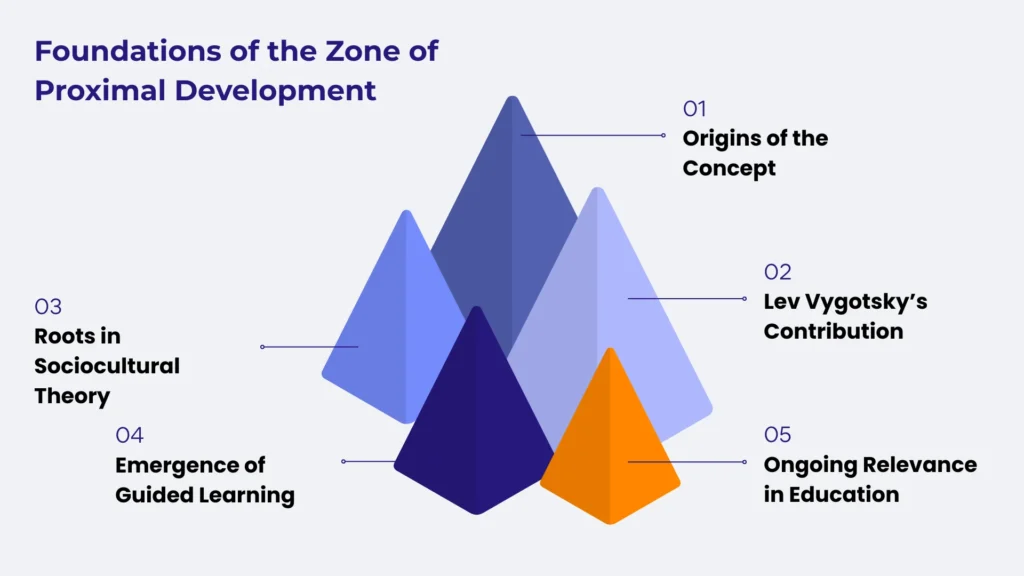
The ZPD comes from deeper ideas about how people learn through interaction, support, and experience. It helps explain why we can often do more with guidance than alone. Understanding its foundation makes the concept feel more practical.
Origins of the Concept
The Zone of Proximal Development was founded by Lev Vygotsky, a Russian psychologist interested in how children learn and develop. He introduced the idea to explain the gap between what a learner can do alone and what they can do with help. This became one of the most important concepts in educational psychology.
Lev Vygotsky’s Contribution
Beyond founding ZPD, Lev Vygotsky changed how people viewed learning itself. He argued that learning grows through social interaction, language, and guidance. His contribution helped educators see support as a vital part of development, not a sign of weakness.
Roots in Sociocultural Theory
ZPD is deeply connected to sociocultural theory, which says learning is shaped by culture, communication, and interaction with others. In this view, knowledge develops through shared experiences rather than in isolation.
Emergence of Guided Learning
As the idea of ZPD developed, it naturally led to the rise of guided learning. This means learners progress best when they receive the right help at the right time. Instead of being left alone or overly directed, they are supported just enough to move forward.
Ongoing Relevance in Education
The Zone of Proximal Development remains relevant because it reflects how real learning still happens today. Students grow best when tasks are challenging but still achievable with support. That’s why ZPD continues to influence teaching and learning across many settings.
Why the Zone of Proximal Development Matters in Education
Not all learning struggles mean a student is “weak,” and not all success means real growth is happening. Sometimes the difference comes down to when and how much support is given, and what the learner is actually ready for. That’s exactly why the ZPD matters so much in education.
Stronger Learning
The Zone of Proximal Development helps you work on tasks that are just a little beyond what you can do alone. You won’t just repeat what you already know; you’re building new understanding with support, and that kind of learning tends to be much stronger because you’re actively involved in figuring things out rather than simply memorising information.
Higher Engagement
You’re more likely to stay engaged when the work feels challenging but still possible. If something is too easy, you’ll get bored. If it feels impossible, you’ll mentally check out before you even begin. The ZPD helps a lecturer hit that middle ground where learning feels meaningful.
Deeper Understanding
One of the biggest strengths of the ZPD is that it supports more than just task completion, it supports real understanding. When you receive guidance as you work through something difficult, you begin to understand not just what you must do, but also why you’re doing it. That leads to better thinking and more meaningful learning overall.
Greater Confidence
There’s something powerful about realising you can do something today that felt impossible yesterday. When you’re supported through challenges at the right level, you’ll start trusting your own ability and start seeing struggle as part of learning.
Lasting Independence
At first glance, the ZPD looks like a concept about support. But really, it’s a concept about independence. The whole idea is to help you do something with support so you can eventually do it on your own later. A student who is guided well today becomes a student who needs less help tomorrow.
Learning Levels & Key Components of the Zone of Proximal Development
The Zone of Proximal Development makes much more sense when you stop seeing learning as just “easy” or “hard.” There’s actually a middle space where the most important growth happens. This table lays out the three learning levels that help define where you, as a learner, are and where you’re ready to go next.
| Learning Level | Description | Example Scenario |
| Current Independent level | Tasks you with what you’re capable of doing alone. | Solving simple addition problems. |
| Zone Of Proximal Development | Tasks that you’re unable to do alone and require assistance. | Your father teaching you how to start a car. |
| Beyond Present Capacity | Tasks that are too difficult, even if someone is assisting you. | Your parkour mentor telling you to do a side-to-side wall jump. |
Key Components
Learning moves through a few important layers before real progress kicks in, and if you miss those layers, it’s easy to confuse struggle with failure. ZPD becomes much easier to understand once you break it into its core moving parts. Let’s look at the key components that quietly shape how learning actually grows.
- The Learner’s Current Skill Level
Every learner starts somewhere, and that starting point matters more than people think. Before growth can happen, you need to know what you can already handle alone. This is the space where things feel familiar and manageable. It may not feel exciting, but it tells us where learning begins.
- This level forms the base for future learning, so everything new builds on what already exists.
- You’re able to complete tasks without any help, which shows what you’ve already mastered.
- It helps mentors decide what the learner is ready to learn next, instead of repeating the same work.
- Tasks Within Reach Through Guidance
This is the part where learning starts to stretch in the best possible way. You’re close to understanding, but still need a bit of help to get there. It feels challenging but not impossible, which is exactly what makes it powerful.
- You’ll be pushing yourself beyond your current ability.
- You’re unable to complete the task alone, but can succeed with support from a lecturer, parent or mentor.
- Mistakes and partial understanding are common here, which signals that real learning is happening.
- Tasks Beyond the Learner’s Present Capacity
Not every challenge leads to growth, sometimes it just leads to confusion. When something is too far ahead, you’ll struggle to even begin. This should remind you that timing in learning really matters because pushing too far too soon can do more harm than good.
- You’re unable to complete these tasks even with support because you haven’t developed the required skills yet.
- This leads to frustration, confusion or disengagement if you’re pushed into this level too often.
- These tasks may become possible later, but they are not suitable for instruction at the current stage.
- The Importance of Timely Instructional Support
The right help can make learning easier and more effective, but support only works well when it is given at the right time. If help comes too soon or too late, it may not be useful. That is why timing plays an important role in learning.
- Well-timed support can help you stay engaged instead of becoming frustrated or stuck.
- It keeps you working within their growth zone, where progress is still possible.
- The right kind of help, such as hints, questions or examples, becomes more useful when given at the right moment.
- Progression From Assistance to Independence
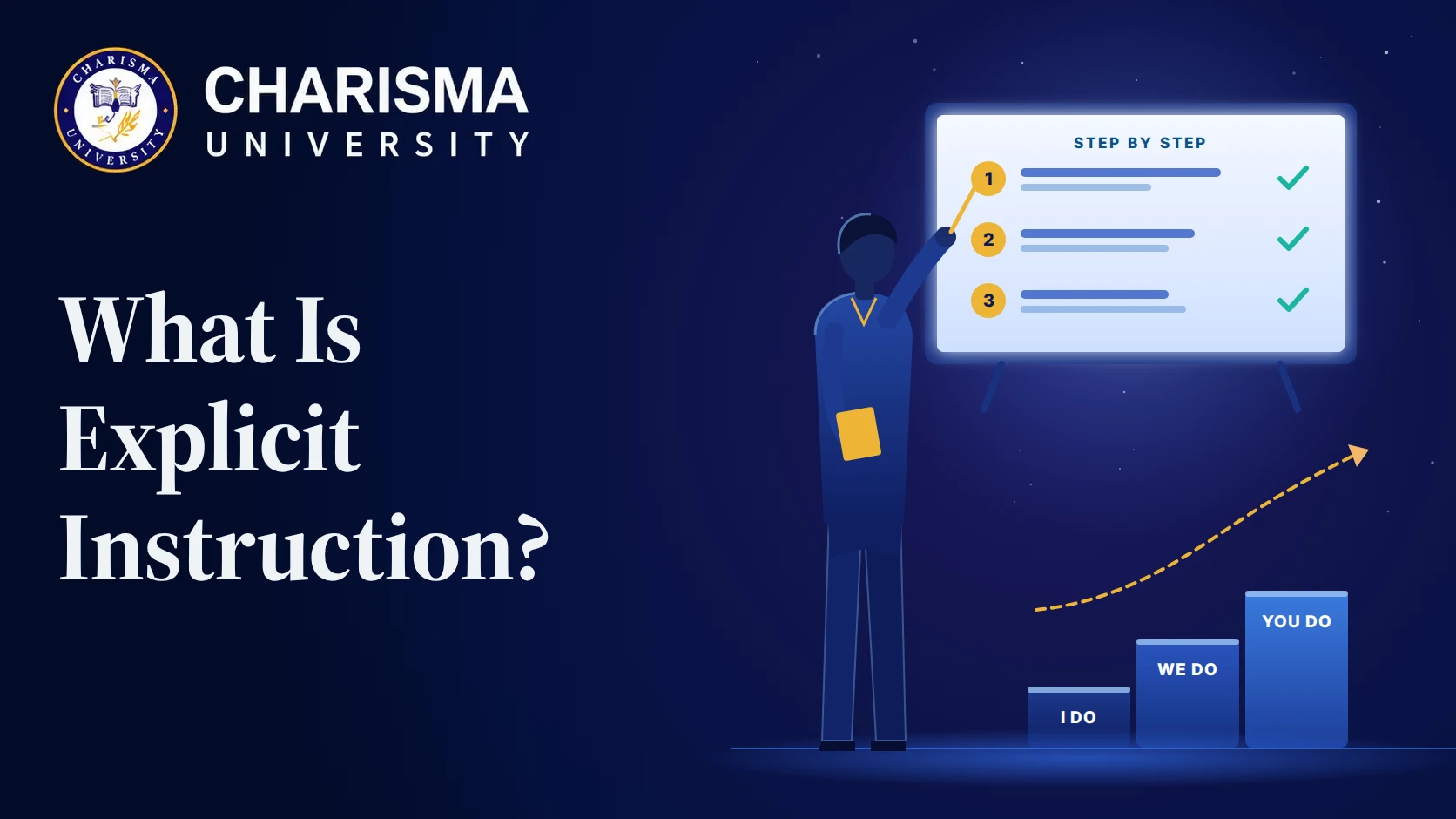
Learning is not meant to stay supported forever, it is meant to grow into independence. At first, help is necessary, but over time, it should slowly step back. The goal is not to rely on support but to outgrow it, and this journey is what turns effort into real ability.
- You’ll begin with guidance and support while developing a new skill or understanding.
- Soon, support is gradually reduced as the learner becomes more confident and capable.
- Eventually, you’re able to perform the task independently, which shows that true learning has taken place.
Identifying a Learner’s Zone of Proximal Development
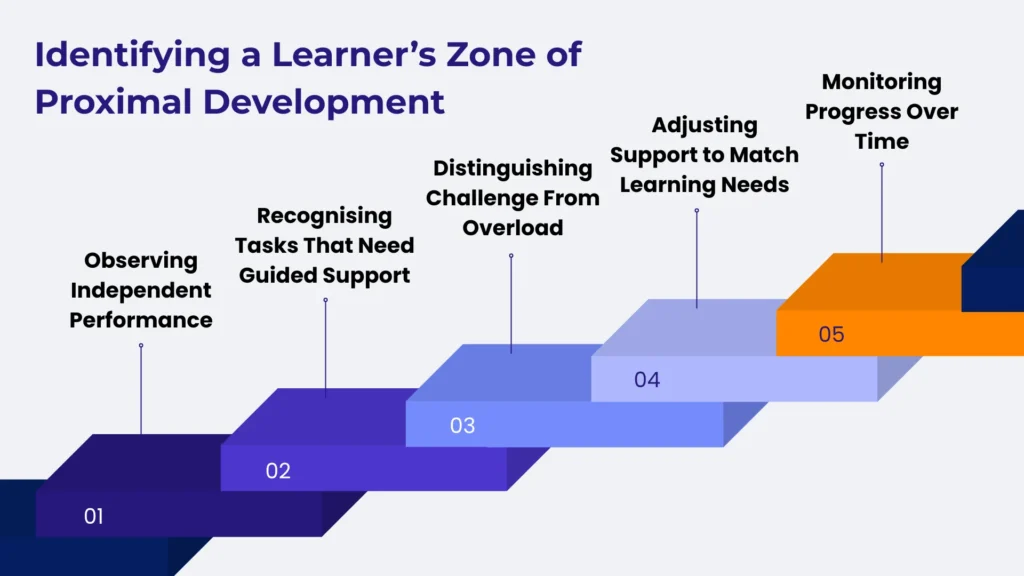
Knowing ZPD is one thing, but have you ever wondered how you’re going to spot it in a real learner? Actually spotting them is a challenge in itself. You don’t measure it with a test, you notice it in how someone learns, and here’s how you can recognise them.
Observing Independent Performance
Start by watching what the learner can do on their own. No hints, no help, just their natural approach to find out their current level. Some tasks will feel easy, while others will look slow but manageable.
Recognizing Tasks That Need Guided Support
Now pay attention to the moments where they get close but stop midway. They might begin confidently and then hesitate, or they solve part of the task but can’t finish it. These are strong signs that the task is within their reach, just not fully independent yet.
Distinguishing Challenge From Overload
If the learner is still trying, thinking, and engaging (even slowly), then that’s a healthy challenge. But if they freeze or look completely lost, the task is likely too far ahead. The difference shows up in how they respond, not just in whether they succeed.
Adjusting Support to Match Learning Needs
Support should match the learner, not follow a fixed script. Some need clear steps, while others just need a small hint. The key is balance, where they receive enough help to keep progress going, but not so much that it replaces their thinking.
Monitoring Progress Over Time
What needs support today shouldn’t need support forever. As the learner improves, step back gradually and let them take more control. When something becomes easy on its own, that’s progress. And right after that, a new challenge begins.
The More Knowledgeable Other in the Learning Process
Ever noticed how learning gets easier the moment the right person steps in? Not someone who takes over, just someone who knows a little more and helps you bridge the gap. That’s where the More Knowledgeable Other quietly changes the whole learning experience. Honestly, this role shows up in more places than you realise.
The Role of the More Knowledgeable Other
A More Knowledgeable Other (MKO) is anyone who knows more than you in a specific area.
They help you handle tasks that feel difficult but are still within reach. In the ZPD, this support often makes growth possible.
Teachers
Teachers are one of the clearest examples of an MKO. They guide you through confusion by explaining, modelling, and providing timely feedback. Their support you move from struggle to understanding.
Parents
They often become your very first MKO and support your learning through guidance, encouragement, and everyday teaching moments. Even simple help at the right time as a kid can build lasting confidence and skill as an adult.
Mentors
Mentors help you grow by sharing their guidance, experience, and practical insight. They often support the tasks you aren’t fully ready to handle alone yet. That kind of support can make progress feel far more achievable.
Technology
Depending on its use, technology can also act as an MKO in modern learning through Apps, video tutorials, and other platforms that can guide you step by step. While they may not be as efficient as a human, they can still provide useful learning support.
Limitations of the Zone of Proximal Development
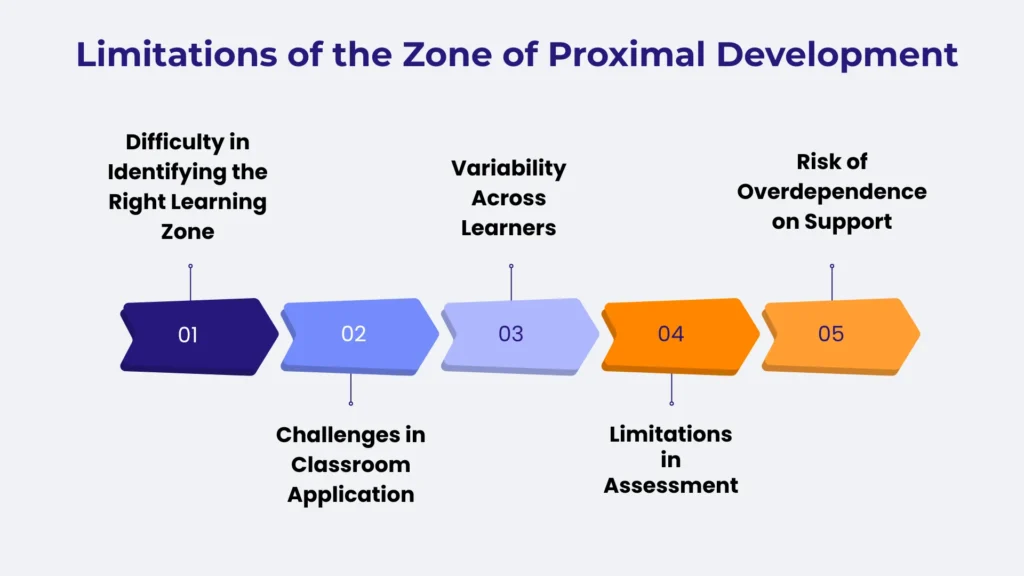
The Zone of Proximal Development is powerful, but it’s not as effortless in practice as it sounds in theory. Once real learners, real classrooms, and real limitations enter the picture, the idea becomes more complicated.
Difficulty in Identifying the Right Learning Zone
One of the biggest limitations of ZPD is figuring out exactly where a learner’s “zone” actually is. A student may do well one day and struggle the next, which makes it hard to judge what they truly need. Because of that, identifying the right level of challenge often requires constant observation rather than a one-time decision.
Challenges in Classroom Application
ZPD works best when support is personalized, but that’s not always easy in busy classrooms. Lecturers often have to manage many learners at different levels all at once. So while the concept is useful, applying it consistently in real teaching environments can be difficult.
Variability Across Learners
Not every learner responds to challenge and support in the same way, which makes ZPD harder to apply evenly. Some need more or less guidance, and others may need completely different approaches. This variability means it cannot be used as a fixed formula for everyone.
Limitations in Assessment
Traditional assessments usually measure what a learner can do alone, but ZPD focuses on what they can do with help. That creates a gap between how learning is often tested and how growth actually happens. As a result, a learner’s true potential may not always show up in standard assessments.
Risk of Overdependence on Support
If support is not reduced at the right time, learners can become too dependent on help. Instead of building independence, they may start feeling like they can only succeed when someone guides them.
FAQs
ZPD supports a child’s cognitive, social, and language development through guided interaction. It helps children gradually become more independent learners.
Yes, ZPD can be used with adult learners in education, training, and workplace learning. Adults also learn better when tasks are slightly challenging but supported.
Social interaction helps learners gain knowledge through discussion, guidance, and collaboration. Vygotsky believed learning happens best through interaction with others.
Yes, that’s possible, more capable peers can support learning within the ZPD. Peer tutoring and group work are common examples.
Easy tasks are already within the learner’s independent ability. They do not require support, so they do not create meaningful growth.