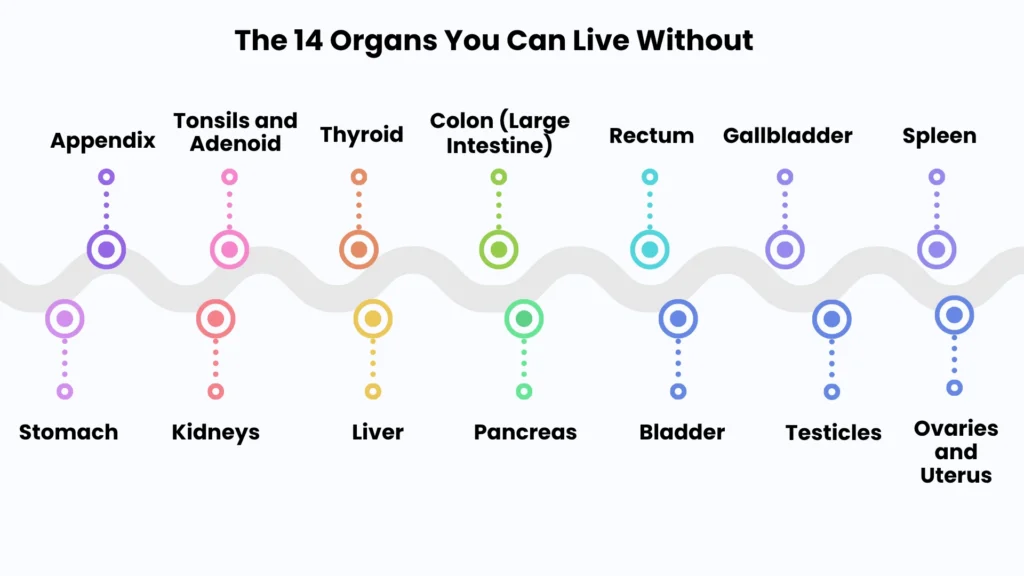
You can live without 14 organs. These include the appendix, one kidney, the spleen, part of the liver, and the gallbladder. The human body has backup systems built in. Surgeons remove these organs every day. Reasons include cancer, injury, or long-term disease. Most patients return to a normal, active life within weeks or months.
This guide covers all 14 organs. It explains why the body still works without each one. It also shows what recovery looks like after surgery. A comparison table below shows recovery time and risk for each organ.
The 14 Organs You Can Live Without
1. Appendix
Function in the body: The appendix sits where the small and large intestine meet. It stores good gut bacteria. This bacteria can refill the colon after illness.
When removal becomes necessary: Doctors perform an appendectomy when the appendix swells, fills with pus, or bursts. About 1 in 20 people get appendicitis at some point in life, making it the top reason doctors remove this organ.
How the body copes without it: A 2018 study found the appendix does help the immune system (Girard-Madoux et al., 2018). But other gut tissue nearby takes over its job within a few months. Most patients notice no long-term effects.
2. Tonsils and Adenoids
Function in the body: Tonsils and adenoids sit at the back of the throat. They trap germs before they reach the lungs and gut. This job matters most in early childhood.
When removal becomes necessary: A tonsillectomy treats children with repeat throat infections. It also treats swelling or blocked airways that disrupt sleep.
How the body copes without it: Doctors now try non-surgical treatment first more often. Once tonsils are removed, other throat tissue takes over. Children show no rise in future infections. Recovery takes 10 to 14 days.
3. Thyroid
Function in the body: The thyroid sits at the base of the neck. It makes hormones that control metabolism, growth, body temperature, and energy.
When removal becomes necessary: A thyroidectomy treats thyroid cancer, goiters, or an overactive thyroid. It’s one of the most common gland surgeries in the world.
How the body copes without it: Removing part of the thyroid rarely causes symptoms. The rest of the gland picks up the slack. Removing the whole gland is different, but manageable. Patients take daily hormone pills. They can still live full, active lives with no diet or exercise limits.
4. Colon (Large Intestine)
Function in the body: The colon absorbs water and salts from digested food. It also forms solid waste before it leaves the body.
When removal becomes necessary: A colectomy removes part or all of the large intestine. Common causes are colon cancer, Crohn’s disease, and ulcerative colitis.
How the body copes without it: The small intestine takes over much of the colon’s work. Surgeons reroute waste in two ways. One option is a stoma (called an ileostomy). The other is an internal J-pouch linked to the rectum. Patients can manage digestion, travel, and exercise as normal.
5. Rectum
Function in the body: The rectum holds waste for a short time before it leaves the body.
When removal becomes necessary: A proctectomy removes the rectum. This happens when cancer or severe swelling spreads into this tissue.
How the body copes without it: Surgeons redirect waste through an ostomy bag. Surgery methods have improved a lot. Most patients return to work, travel, and normal activity within two to three months. Modern equipment is discreet and fits under regular clothes.
6. Gallbladder
Function in the body: The gallbladder stores bile made by the liver. It releases bile to help digest fat between meals.
When removal becomes necessary: A cholecystectomy treats gallstones, growths, or repeat pain from swelling. It’s one of the most common belly surgeries in the world.
How the body copes without it: The liver keeps making bile all the time, even without the gallbladder. So digestion still works. Most patients cut back on very fatty food for a few weeks. After that, most report no lasting problems.
7. Spleen
Function in the body: The spleen filters blood. It recycles old red blood cells. It also helps the immune system fight certain bacteria.
When removal becomes necessary: A splenectomy follows trauma, rupture, infection, or certain blood diseases like some lymphomas.
How the body copes without it: The liver and lymph nodes take over most of the filtering work. People without a spleen can live full, active lives. But doctors recommend extra vaccines against pneumonia, meningitis, and flu. This helps lower a higher long-term risk of infection.
8. Stomach
Function in the body: The stomach breaks down food with acid and enzymes. Then it passes the food to the small intestine to be absorbed.
When removal becomes necessary: Weight-loss and cancer surgeries can remove part or all of the stomach. This procedure is called a gastrectomy.
How the body copes without it: Surgeons can connect the esophagus straight to the small intestine when needed. Patients switch to five or six small meals a day. Most regain steady digestion and stable weight within six to twelve months.
9. Kidneys
Function in the body: The kidneys filter waste and extra fluid from blood. They also make urine.
When removal becomes necessary: A nephrectomy removes one kidney. Common reasons are organ donation, cancer, or serious injury. One healthy kidney can filter blood well enough to support a fully normal life, including pregnancy and competitive sports.
How the body copes without it: A study of 124 living kidney donors found stable health years later (Ferro et al., 2019). The study found no clear link between donor age and kidney decline. Losing both kidneys is different. It requires dialysis or a transplant to survive.
10. Liver (Partial Removal)
Function in the body: The liver filters toxins from blood. It makes bile for digestion. It stores energy. It also makes proteins the body needs for clotting and immunity.
When removal becomes necessary: A partial hepatectomy removes diseased or cancerous liver tissue. It can also take a healthy piece from a living donor for a transplant.
How the body copes without it: The liver is the only organ in the body that grows back. Surgeons can remove up to 70% of it, and it can regrow to near-full size within a few months — no other organ can do this. The remaining tissue grows back within weeks, which is why living-donor liver transplants work. Both the donor’s liver and the transplanted piece grow to a working size.
11. Pancreas (Partial or Total)
Function in the body: The pancreas makes insulin to control blood sugar. It also makes digestive enzymes that break down food in the small intestine.
When removal becomes necessary: A pancreatectomy treats pancreatic cancer, severe pancreatitis, or tumors. Surgeons can remove part of the organ or the whole gland.
How the body copes without it: Removing part of the pancreas often leaves enough tissue for normal insulin and enzyme output. Removing the whole gland is harder. It requires lifelong insulin shots and enzyme pills with meals. This is a bigger adjustment than most other surgeries on this list. Still, patients can eat a full diet with the right care.
12. Bladder
Function in the body: The bladder stores urine made by the kidneys until it’s ready to leave the body.
When removal becomes necessary: A cystectomy treats bladder cancer or severe urinary disease that damages the organ beyond repair.
How the body copes without it: Surgeons build a new path for urine, called a urostomy. They can also build an internal pouch from a piece of intestine. This pouch acts like a bladder. Most patients manage daily care and return to normal work and social life within a few months.
13. Testicles
Function in the body: The testicles make sperm and testosterone. Testosterone drives male physical and reproductive development.
When removal becomes necessary: An orchiectomy removes one or both testicles. This treats testicular cancer or injury.
How the body copes without it: Hormone therapy restores testosterone after surgery. This keeps energy, bone strength, and mood stable. Fertility ends unless sperm was banked before surgery. Sexual function and quality of life often stay steady once hormones are managed.
14. Ovaries and Uterus
Function in the body: The ovaries make eggs, estrogen, and progesterone. The uterus supports pregnancy.
When removal becomes necessary: An oophorectomy removes one or both ovaries. A hysterectomy removes the uterus. Common causes are cancer, endometriosis, or severe reproductive disease.
How the body copes without it: Both surgeries end fertility. Removing both ovaries causes immediate menopause. Hormone therapy protects bone density and heart health long-term. This matters most for patients who have surgery before natural menopause age.
Quick Comparison: Recovery Time and Risk by Organ
| Organ | Hospital Stay | Full Recovery | Long-Term Risk | Needs Hormone/Med Replacement |
| Appendix | 1–2 days | 2–4 weeks | Very low | No |
| Tonsils/Adenoids | Same day–1 day | 10–14 days | Very low | No |
| Thyroid | 1–2 days | 2–4 weeks | Low | Yes (daily pill) |
| Colon | 3–7 days | 6–8 weeks | Moderate | No |
| Rectum | 5–7 days | 8–12 weeks | Moderate | No |
| Gallbladder | Same day–1 day | 1–2 weeks | Very low | No |
| Spleen | 3–5 days | 4–6 weeks | Moderate (infection risk) | No (extra vaccines) |
| Stomach | 5–7 days | 6–12 months | Moderate | Sometimes (B12) |
| One Kidney | 2–4 days | 4–6 weeks | Low | No |
| Liver (partial) | 5–7 days | 6–8 weeks | Low (organ regrows) | No |
| Pancreas (partial) | 5–10 days | 8–12 weeks | Moderate–high | Often (insulin/enzymes) |
| Bladder | 5–7 days | 8–12 weeks | Moderate | No |
| Testicles | 1 day | 2–4 weeks | Low | Yes (testosterone) |
| Ovaries/Uterus | 1–3 days | 4–6 weeks | Low–moderate | Yes (if both ovaries) |
These ranges cover typical cases without complications. Actual recovery depends on surgery type and patient health.
Why Does Human Anatomy Allow This?
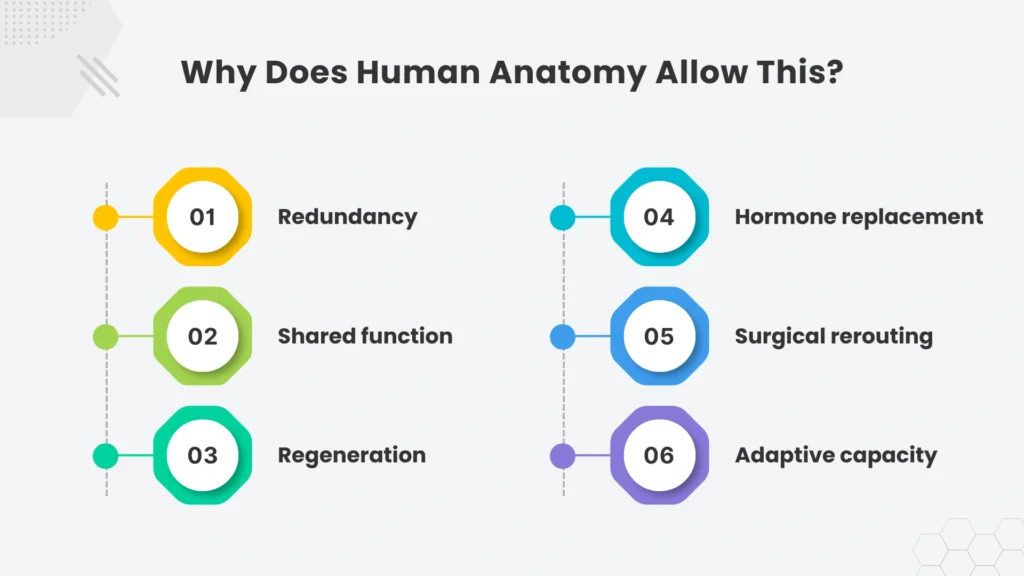
The body has several layers of built-in protection. That’s why losing an organ doesn’t always end a person’s life. Here’s why:
- Redundancy: The body pairs some organs, like the kidneys and ovaries. One healthy organ can cover the work of two.
- Shared function: Several organs split the same job. The liver, lymph nodes, and gut tissue can pick up duties once handled by the spleen or appendix.
- Regeneration: The liver grows back lost tissue. This lets surgeons remove large sections without permanent loss.
- Hormone replacement: Modern medicine replaces lost hormones with daily pills. This is why patients survive losing the thyroid, ovaries, testicles, or pancreas.
- Surgical rerouting: Surgeons rebuild internal paths, like a J-pouch or urostomy. Waste and fluids still leave the body safely.
- Adaptive capacity: The tissue that’s left often works harder after surgery. Doctors call this compensatory hypertrophy. It helps one kidney or part of a thyroid do a full job.
How Doctors Decide When to Remove an Organ
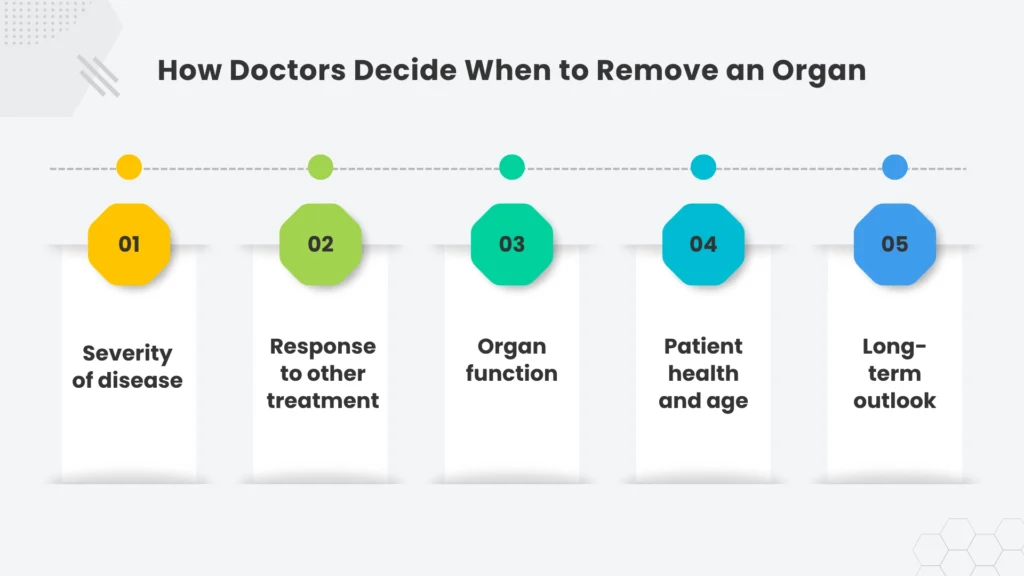
Surgeons weigh several things before they recommend organ removal. Every surgery carries some risk.
- Severity of disease: Cancer, rupture, or serious infection often leaves no safer option than surgery.
- Response to other treatment: Doctors try medicine, diet changes, or minor procedures first, when possible.
- Organ function: Surgeons check if the organ still works or if disease has already destroyed it.
- Patient health and age: Overall fitness for surgery and anesthesia shapes the timing and type of procedure.
- Long-term outlook: Doctors compare life with and without the organ before they make a final call.
Recovery and Quality of Life After Organ Removal
Recovery time depends on the organ and the surgery method. Most patients follow a similar path. First comes a hospital stay of one to seven days. Next is a recovery period of two to twelve weeks. Then patients slowly return to full activity. Minimally invasive surgery, like laparoscopic or robotic methods, has cut recovery time for gallbladder and appendix removal to just one or two weeks in many cases.
Long-term quality of life depends a lot on follow-up care. Patients who go to checkups, take their medicine on time, and eat well tend to report life satisfaction close to the general public. Long-term studies of kidney donors confirm this pattern.
Study Human Anatomy at Charisma University
Learning which organs the body can spare, and why, sits at the heart of health sciences education. Students who want to study human organ anatomy in depth can build that foundation at the School of Health Sciences at Charisma University.
Charisma University offers three paths into this field:
- BSc. in Health Sciences (Health Professions) – prepares students for clinical and allied health careers.
- BSc. of Health Sciences (Health Promotion) – trains graduates to lead public health and prevention programs
- RN to BSN – advances working nurses toward a bachelor’s degree in nursing.
Each program mixes anatomy, physiology, and hands-on clinical training. Graduates learn how to support patients through organ surgery, recovery, and long-term care.
Frequently Asked Questions
A person can live without at least 14 organs. These include the appendix, tonsils, thyroid, colon, rectum, gallbladder, spleen, stomach, one kidney, part of the liver, part of the pancreas, the bladder, and reproductive organs like the testicles, ovaries, or uterus.
Losing both kidneys carries the highest risk. It requires dialysis or a transplant to survive. Total pancreas removal also carries a heavy long-term burden, since it means lifelong insulin use. Losing one kidney or part of the liver, on the other hand, rarely hurts long-term health.
Yes. Most people live a normal life without a spleen. Doctors recommend extra vaccines to lower the risk of certain infections.
No. Only hormone-making organs need replacement therapy. These are the thyroid, ovaries, testicles, and pancreas. Organs like the gallbladder, spleen, and appendix don’t need it.
The liver is the only major organ that regenerates. Surgeons can remove up to 70% of it. It regrows to near-full size within months. This is what makes living-donor liver transplants possible.
Most patients recover in two to twelve weeks. This depends on the organ and the surgery type. Minimally invasive surgery often cuts this time to one or two weeks. Pancreas and stomach surgeries usually need the longest adjustment, often three to twelve months.
Living donors usually give one kidney or part of their liver. These are the only major organs the body can safely spare in part while a person is still alive.