Becoming a psychiatrist requires years of medical education, clinical training, and licensing, but it’s also one of the most respected and impactful careers in healthcare. If you’re asking yourself, “How to become a psychiatrist?”, your journey will typically begin with medical school and a specific specialisation in mental health treatment.
The demand for psychiatrists is rising rapidly across the world. More than 1 billion people globally live with mental health disorders, while over 122 million Americans currently live in areas facing shortages of mental health professionals. In the US alone, there is only about 1 psychiatrist for every 5,058 people, showing just how urgently this field needs new specialists.
Experts also predict the US could face a shortage of nearly 43,000 psychiatrists by 2038, while more than 60% of practicing psychiatrists are approaching retirement age. At the same time, psychiatry remains one of the fastest-growing medical specialties due to increasing awareness around anxiety, depression, addiction, and emotional health.
And now, you’ll learn what psychiatry actually involves, the essential skills required, step-by-step pathways, salaries, and common mistakes to avoid while building a successful psychiatry career.
Understanding Psychiatry as a Career
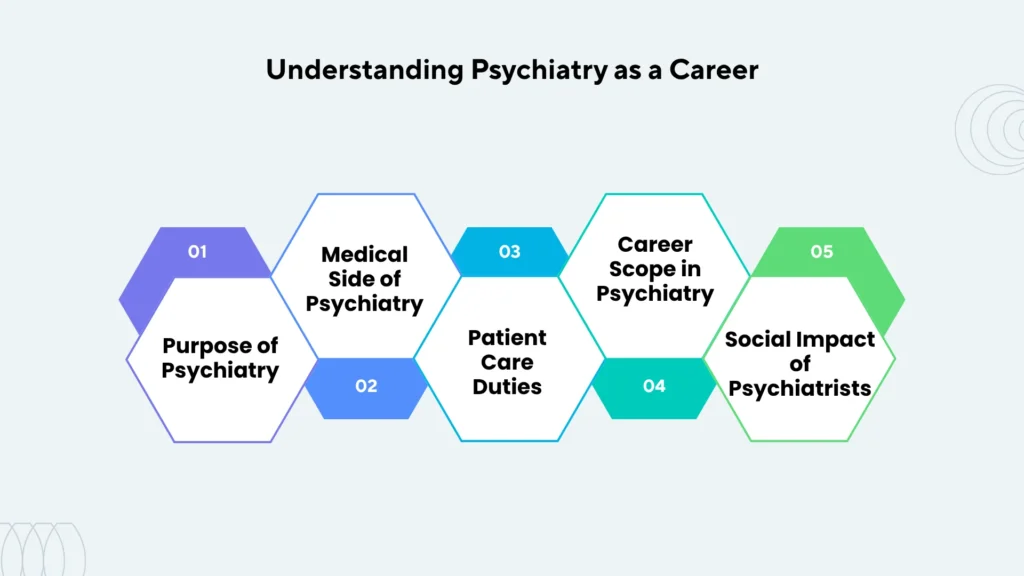
Every day, millions of people silently struggle with anxiety, depression, trauma, and emotional pain. Psychiatrists step into those difficult moments to guide patients toward stability, hope, and recovery. That connection is one reason this career feels deeply meaningful to many future doctors.
Purpose of Psychiatry
Psychiatry focuses on understanding mental disorders and helping patients regain emotional balance. The field combines medical science with human connection so psychiatrists can improve daily functioning relationships and overall mental well-being through proper treatment and ongoing support.
Medical Side of Psychiatry
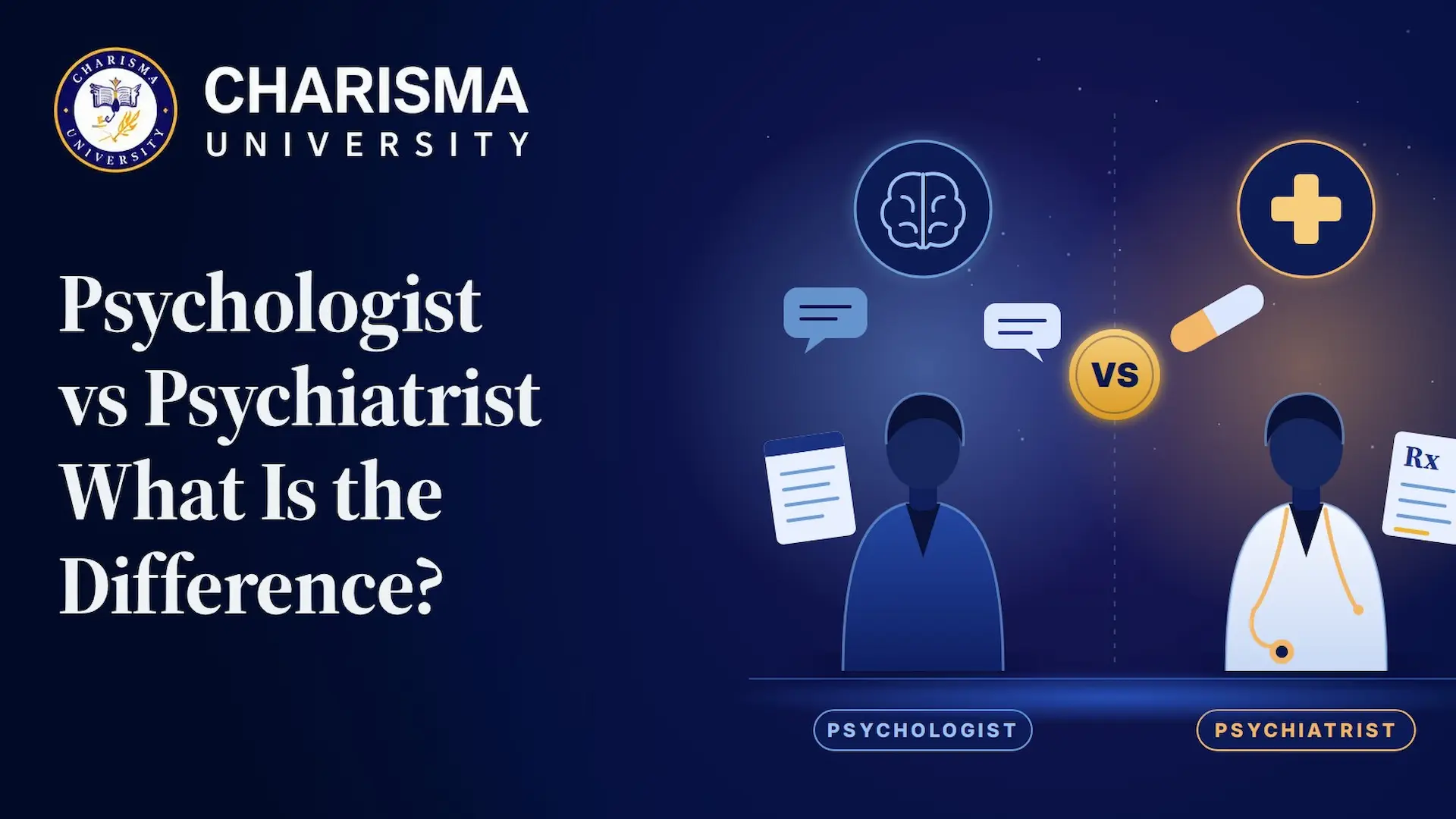
Unlike psychologists, psychiatrists attend medical school and receive training in diagnosing illnesses, prescribing medication, and understanding brain function. Their medical background allows them to treat complex mental conditions using both scientific knowledge and psychiatric treatment methods.
Patient Care Duties
Patients rely on psychiatrists for diagnosis, treatment planning, medication management, and emotional support during difficult periods of life. Many psychiatrists also provide therapy sessions while monitoring progress to ensure patients respond positively to their prescribed treatments.
Career Scope in Psychiatry
Growing awareness about mental health has created a strong demand for psychiatrists across hospitals, clinics, schools, rehabilitation centers, and private practices. The profession offers career flexibility, stable income opportunities, and multiple specialization options for long-term professional growth.
Social Impact of Psychiatrists
Mental health professionals often become life-changing figures for people facing any emotional problems. Their guidance helps patients rebuild confidence, improve relationships, return to work, and regain control over situations that once felt impossible to overcome.
Essential Skills Required for a Successful Psychiatry Career
Sitting across from someone battling anxiety or depression is not something every doctor can handle well. Psychiatry demands far more than medical knowledge because patients depend on your ability to understand emotions and guide them through some of the darkest moments of their lives.
Communication Skills
Clear communication helps psychiatrists build trust with patients who may already feel misunderstood or emotionally overwhelmed. Strong speaking and listening abilities also improve diagnosis, treatment planning, and patient comfort during difficult conversations about mental health struggles.
Emotional Intelligence
Understanding emotions allows you to recognise hidden distress and respond calmly during sensitive situations. Emotional intelligence also helps create stronger patient relationships, which often leads to better treatment outcomes and improved long-term mental health recovery.
Critical Thinking
Smart decision-making is essential because mental health conditions rarely appear in identical ways. Critical thinking helps you analyse symptoms, identify patterns, evaluate treatment responses, and choose the safest approach for each patient.
Patience & Empathy
Many mental health conditions require months or even years of treatment before major improvement appears. Patience helps you stay supportive, while empathy allows patients to feel respected, understood, and emotionally safe during recovery.
Ethical Judgment
Professional ethics guide psychiatrists through sensitive situations involving privacy treatment decisions and patient safety. Ethical judgment becomes especially important when handling severe mental illness addiction cases or emergencies involving potential harm.
How to Become a Psychiatrist Step-by-Step
The road toward becoming a psychiatrist can feel intimidating when you first see how many years, exams, and sacrifices stand ahead. But once you overcome these obstacles, the journey stops feeling impossible and starts feeling like a meaningful mission worth pursuing completely.
Step 1: High School Preparation
Long before medical school applications and hospital rotations begin, your foundation quietly starts forming during high school years. The habits, grades, and confidence you build here often determine whether your psychiatry dream grows stronger or disappears under academic pressure later.
- Study Biology and Chemistry seriously because medical foundations begin developing during high school years.
- Build communication skills through debates, volunteering, and presentations, improving confidence with future patients considerably.
- Maintain strong grades consistently because competitive medical programs expect excellent academic performance from applicants.
Step 2: Bachelor’s Degree
College feels exciting until reality suddenly hits, and you realise medical schools expect extraordinary dedication everywhere. These undergraduate years are not simply about earning degrees because they quietly shape your discipline and emotional maturity in entering challenging medical environments successfully.
- Choose Psychology, Biology, or Neuroscience majors to strengthen medical school applications and scientific understanding significantly.
- Gain clinical experience through hospital volunteering opportunities, exposing you to realistic psychiatric healthcare environments early.
- Prepare thoroughly for medical entrance exams because scores strongly influence admission opportunities later nationwide.
Step 3: Medical School
Medical school will change you completely. The pressure intensifies, sleep becomes unpredictable, and responsibilities suddenly feel terrifyingly real. But somewhere between exhausting lectures and emotional patient interactions, you need to build resilience and compassion to shape extraordinary mental healthcare careers ahead.
- Learn brain disorders, medications, and diagnosis methods through intensive classroom and clinical medical training.
- Complete psychiatry rotations interacting directly with patients experiencing diverse emotional and psychological health conditions.
- Develop professional discipline balancing academic pressure, patient care responsibilities, and emotional resilience throughout training.
Step 4: Psychiatry Residency
After surviving years of exhausting exams and medical school pressure, residency becomes the stage where you finally practice real psychiatric medicine daily. This training period tests your emotional strength, patient handling, and clinical expertise beyond anything previously experienced during academic education.
- Diagnose mental illnesses independently, while supervised psychiatrists evaluate your clinical decision-making abilities regularly.
- Manage patient treatments, including medications, therapy approaches, and emergency psychiatric situations professionally during residency.
- Build clinical confidence through continuous patient interaction, evaluations, and practical psychiatric healthcare experiences daily.
Step 5: Licensing & Specialisation
Reaching this stage will feel surreal because years of sacrifice will finally begin opening meaningful professional opportunities everywhere. Yet many psychiatrists continue advancing further, choosing specialised fields allowing deeper expertise and stronger salaries.
- Pass required licensing exams proving professional competency before practicing psychiatry independently within healthcare systems legally.
- Pursue specialisations in any field you want so you can expand your career opportunities significantly afterward.
- Continue medical education regularly because psychiatric treatments, research, and technologies constantly evolve professionally.
Psychiatry Specialisation Pathways
Many students enter psychiatry thinking the career follows one fixed direction, but that changes quickly during training. As they meet different patients and experience real clinical environments, they begin discovering multiple fields that completely reshape how they imagine their future in mental health medicine.
| Specialisation | Focus Area | Typical Patients | Common Workplaces |
| Child and Adolescent Psychiatry | Mental health in children | Kids and teenagers | Schools and hospitals |
| Forensic Psychiatry | Mental health and law | Criminal justice patients | Courts and prisons |
| Addiction Psychiatry | Substance abuse disorders | Addiction patients | Rehabilitation centers |
| Geriatric Psychiatry | Elderly mental health | Older adults | Senior care facilities |
| Neuropsychiatry | Brain behavior disorders | Neurological patients | Research hospitals |
| Emergency Psychiatry | Crisis intervention | Emergency patients | Emergency departments |
| Military Psychiatry | Veteran mental health | Soldiers and veterans | Military healthcare facilities |
| Consultation Psychiatry | Mental health in medical settings | Hospital patients | General hospitals |
Choosing a specialisation usually depends on your interests and long-term career goals. Each pathway offers unique experiences, different patient populations, and distinct working environments that shape your career and professional ambitions over time.
Cost of Becoming a Psychiatrist
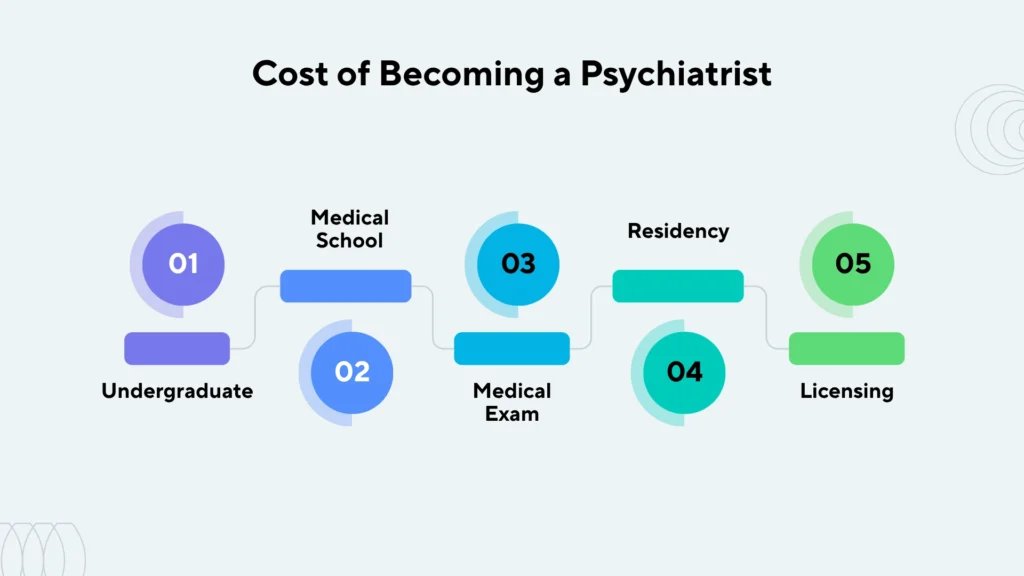
Chasing a psychiatry career is not only emotionally demanding but financially intense as well. You’ll definitely feel shocked when you discover how expensive the journey can become. Understanding the real costs early helps you prepare smarter and avoid unnecessary financial pressure later.
Undergraduate
Undergraduate education usually costs between $10,000 and $40,000 per year, depending on the university and country. You must also pay for books, accommodation, transportation, and daily living expenses throughout the degree program.
Medical School
Medical school can cost anywhere from $40,000 to over $100,000 annually at private institutions. Tuition fees, clinical training supplies, housing, insurance, and educational materials make this stage the most financially demanding part of becoming a psychiatrist.
Medical Exam
Entrance and licensing exams may cost between $1,000 and $10,000 overall when preparation courses and registration fees are included. Practice resources, travel expenses, and multiple exam attempts can quickly increase the total amount students spend.
Residency
Residents receive salaries that generally range from $50,000 to $70,000 yearly, depending on location and hospital programs. Despite earning income, many residents still struggle with educational debt, relocation expenses, and long working hours during training years.
Licensing
Professional licensing and certification costs often range between $500 and $5,000 throughout a psychiatrist’s career. Renewal fees, continuing education courses, board certifications, and legal registrations create recurring expenses even after becoming a fully qualified psychiatrist.
Psychiatry Preparation Resources
Starting your psychiatry journey can feel overwhelming at first because there is so much to study and understand. The right resources can make your path smoother and more convenient during difficult moments of medical training.
Psychiatry Books
Reading strong psychiatry books helps you understand mental health conditions, patient behavior, and treatment methods more clearly. Titles like Kaplan and Sadock’s Psychiatry and An Unquiet Mind offer both clinical knowledge and real emotional insight.
Online Courses
Several online platforms provide psychiatry courses that explain complex topics and communication skills in simple language. These courses are useful for beginners who want flexible learning while preparing for medical education and clinical training.
Internships
They’ll allow you to observe psychiatrists working with real patients in professional settings. This practical exposure develops communication abilities and helps you understand the emotional responsibilities connected with psychiatric care.
Study Techniques
Effective study methods help psychiatry students manage huge amounts of medical information without feeling mentally exhausted. Make sure to actively recall, revise schedules, and practice questions to improve memory retention while making complex psychiatric concepts easier to understand over time.
Medical Mentors
Experienced medical mentors guide students through difficult academic decisions and career challenges during psychiatry training. Their advice often helps you avoid common mistakes while gaining valuable professional direction.
Psychiatrist Salary and Career Growth Potential
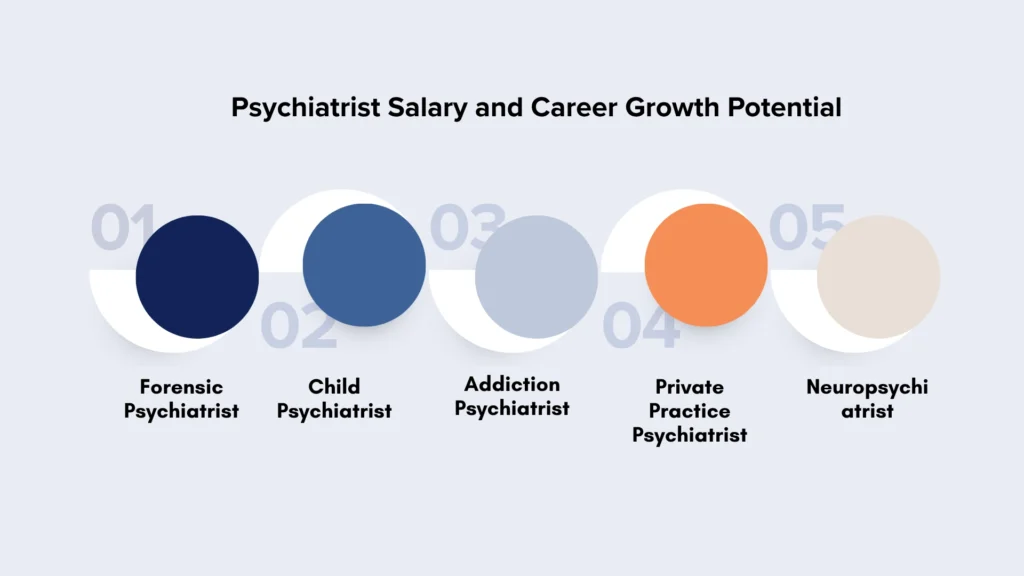
After spending years studying medicine and surviving intense training, you’ll eventually wonder whether the career truly offers financial stability and professional growth. The good news is that psychiatry remains one of the most rewarding medical careers in both income and long-term opportunities.
Forensic Psychiatrist
Working within the legal system allows you to handle criminal evaluations, court cases, and mental competency assessments. Offering strong career growth because law enforcement agencies, prisons, and courts constantly require psychiatric expertise.
Average Salary: $266,404 annually (ZipRecruiter)
Child Psychiatrist
Treating children and teenagers with emotional disorders creates excellent career opportunities due to the global shortage of specialists. Child psychiatrists often receive competitive salaries while working in hospitals, schools, private clinics, and family counseling centers.
Average Salary: $282,196 annually (ZipRecruiter)
Addiction Psychiatrist
Focusing on substance abuse treatment gives addiction psychiatrists access to rapidly growing healthcare sectors. Rising addiction cases across the world continue to increase demand for professionals who can treat alcohol dependency and drug abuse successfully.
Average Salary: $253,773 annually (ZipRecruiter)
Private Practice Psychiatrist
Running a private psychiatry clinic can generate high income and greater schedule flexibility. Many experienced psychiatrists prefer private practice because it allows independence, stronger patient relationships, and the ability to control workload and consultation fees.
Average Salary: $259,497 annually (ZipRecruiter)
Neuropsychiatrist
Specialising in brain behavior disorders places neuropsychiatrists in advanced medical and research environments. Hospitals, neuroscience centers, and academic institutions actively seek experts who understand both neurological conditions and complex psychiatric disorders in modern healthcare systems.
Average Salary: $223,187 annually (ZipRecruiter)
Advantages & Challenges of Becoming a Psychiatrist
Some careers simply pay the bills, but psychiatry reaches far deeper than that. One day, you may help someone rediscover hope, while another day leaves you emotionally exhausted. Before stepping into this demanding field, it is important to understand both the rewards and the realities waiting ahead.
| Advantages | Challenges |
| High salary potential | Long education journey |
| Meaningful work helping patients | Emotional stress from difficult cases |
| Strong global job demand | Expensive medical education |
| Flexible career opportunities | Risk of burnout |
| Ability to open a private practice | Mentally draining patient situations |
| Respect within the medical field | Competitive admissions process |
| Multiple specialisation choices | Long residency working hours |
| Opportunities for research and teaching | Continuous learning requirements |
Choosing psychiatry is rarely a simple decision because the profession comes with both meaningful rewards and serious personal sacrifices. Understanding these advantages and challenges early helps you prepare emotionally and financially before committing to such a demanding yet impactful medical career.
Future Trends in Psychiatry
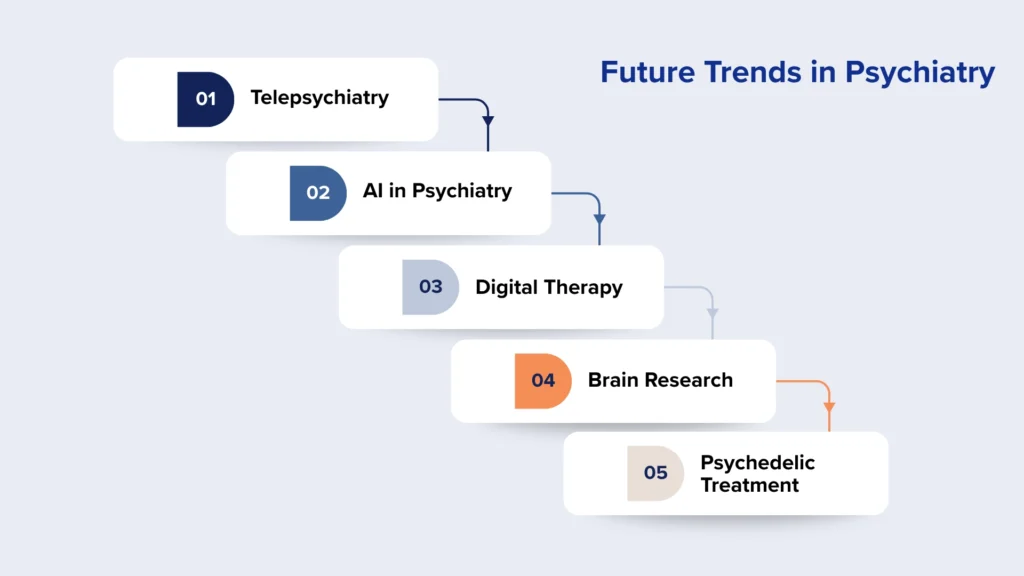
Mental health care is entering a completely new era where technology and science are changing how psychiatrists diagnose illnesses and treat patients. What once felt impossible is slowly becoming reality, and you will experience a career very different from today.
Telepsychiatry
Millions of patients now receive mental health support through online consultations instead of visiting clinics in person. Telepsychiatry improves access for people living in remote areas and gives psychiatrists more flexibility in managing appointments and patient care.
AI in Psychiatry
Artificial intelligence is helping psychiatrists identify mental health patterns faster and improve treatment decisions with better data analysis. Many hospitals already use AI tools to monitor symptoms and support doctors during complex psychiatric evaluations.
Digital Therapy
Modern therapy apps and online platforms allow patients to access mental health exercises and emotional support anytime. Digital therapy is becoming popular because it offers convenience, affordability, and additional guidance between psychiatrist appointments.
Brain Research
Scientists continue to discover how brain chemistry affects emotions, memory, and human behavior through advanced neurological research. These findings may help psychiatrists create more personalized treatments that improve recovery outcomes for patients with mental illnesses.
Psychedelic Treatment
Researchers are studying psychedelic-based treatments for conditions like severe depression, anxiety, and trauma disorders. Early clinical results appear promising, and many experts believe these therapies could become an important part of future psychiatric care.
Common Mistakes to Avoid While Pursuing Psychiatry
You might enter psychiatry with passion and big dreams, but later feel overwhelmed by pressure, exhaustion, and disappointment. Avoiding a few common mistakes early can save years of frustration and give you a head start on building a meaningful career.
Weak Preparation
Rushing into medical studies without strong science fundamentals creates serious problems later. If you ignore biology, chemistry, and communication skills, especially in high school, then you’ll most likely struggle with medical school pressure.
Poor Grades
Low academic performance can reduce your chances of entering quality medical schools and residency programs. Consistent study habits and disciplined time management matter far more than last-minute preparation before important exams.
No Experience
Choosing this path without spending time in hospitals or mental health settings would be your downfall. Real exposure helps you understand patient care, emotional challenges, and whether the profession truly matches your personality and goals.
Wrong Expectations
Television often makes psychiatry appear dramatic and simple, while reality is very different. Progress with patients can take months or years, and some situations become emotionally exhausting even for experienced professionals.
Burnout
Constant studying and emotional pressure can slowly drain your motivation and mental health. Ignoring rest, exercise, and personal balance often loses your focus during medical training.
FAQs
It is possible, but they must still attend medical school, complete psychiatry residency training, and obtain a professional medical license.
It is now in the modern world, telepsychiatry allows psychiatrists to conduct online consultations, therapy sessions, and medication follow-ups remotely from home.
Yes, psychiatry residency is challenging because residents manage real patients, emergencies, long work hours, and complex mental health cases.
Many experienced psychiatrists eventually open private practices to gain schedule flexibility, independence, and higher income potential.
Psychiatry is emotionally challenging rather than physically demanding, requiring deep patience, analytical thinking, and strong interpersonal communication abilities.