Stress is your body’s automatic reaction to pressure, demands, and competing priorities. To manage stress, identify your triggers, apply the 4 As (avoid, alter, accept, adapt), and build a small set of daily habits that lower your stress hormones and restore your energy. This guide walks through every stage: spotting your first warning signs, choosing the right coping strategy, and knowing when to call a professional.
Stress is widespread. The American Psychological Association’s 2025 Stress in America survey of over 3,000 U.S. adults found that 62% named societal division as a major stressor, and roughly three in four said they feel more stressed about the country’s future than before. Managing stress isn’t a niche skill; it’s a daily necessity for most adults.
What Is Stress and Why Does It Matter
Stress is a physical and mental reaction to a perceived threat or demand. Your hypothalamic-pituitary-adrenal (HPA) axis, the body’s central stress-response system, releases cortisol and adrenaline, which speed up your heart rate and sharpen your focus. A moderate amount of stress motivates you to meet a deadline or perform well under pressure. Prolonged stress, though, produces allostatic load, the cumulative wear on your body from repeated stress activation.
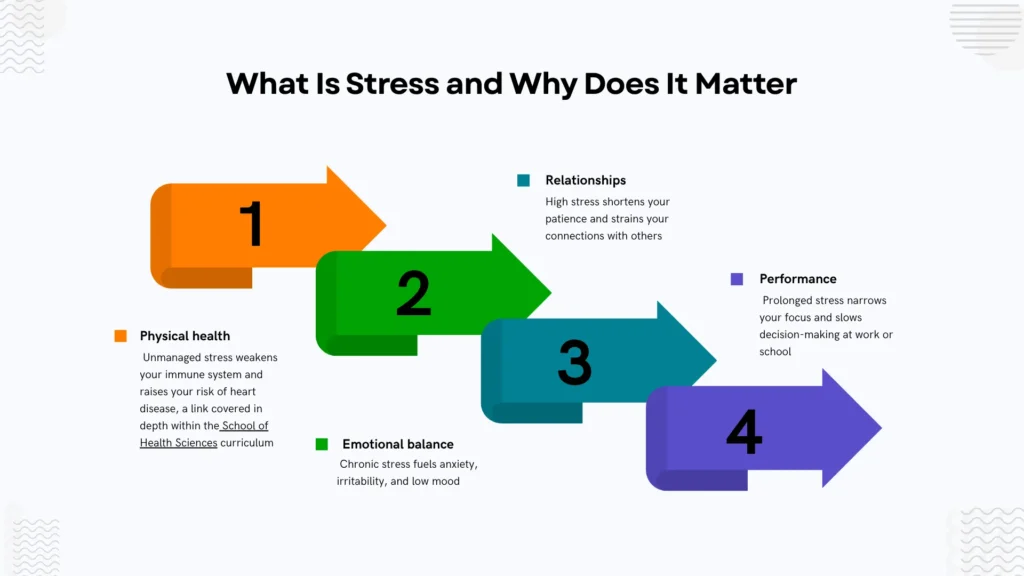
Stress management matters because it protects four areas of your life:
- Physical health: Unmanaged stress weakens your immune system and raises your risk of heart disease, a link covered in depth within the School of Health Sciences curriculum.
- Emotional balance: Chronic stress fuels anxiety, irritability, and low mood.
- Relationships: High stress shortens your patience and strains your connections with others.
- Performance: Prolonged stress narrows your focus and slows decision-making at work or school.
3 Types of Stress You Experience
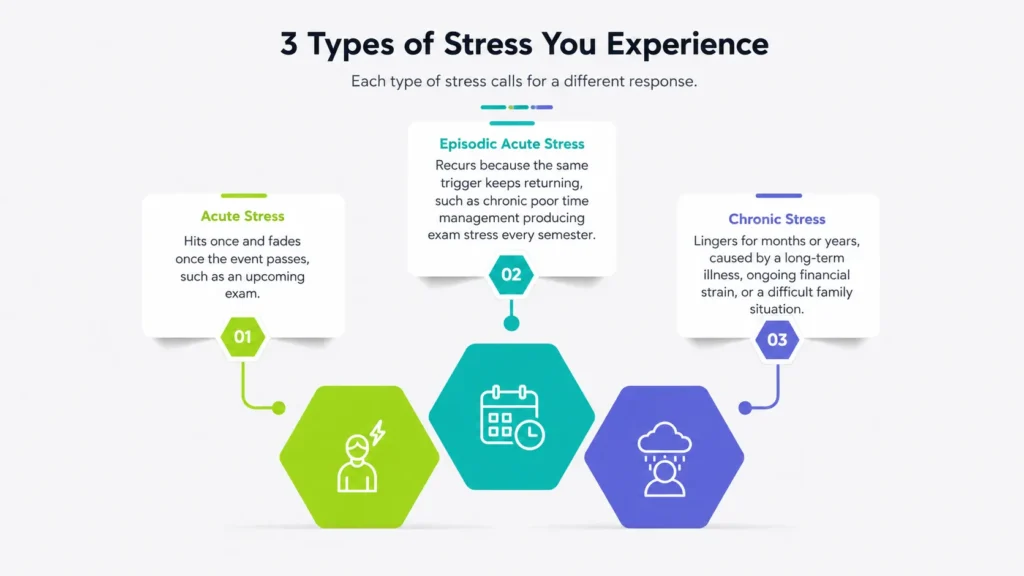
Each type of stress calls for a different response.
- Acute stress hits once and fades once the event passes, such as an upcoming exam.
- Episodic acute stress recurs because the same trigger keeps returning, such as chronic poor time management producing exam stress every semester.
- Chronic stress lingers for months or years, caused by a long-term illness, ongoing financial strain, or a difficult family situation.
Stress also moves along a continuum. Low to moderate stress keeps you sharp and productive. Stress that stays too high for too long tips you into exhaustion, anxiety, and eventually burnout.
What Causes Stress in Daily Life
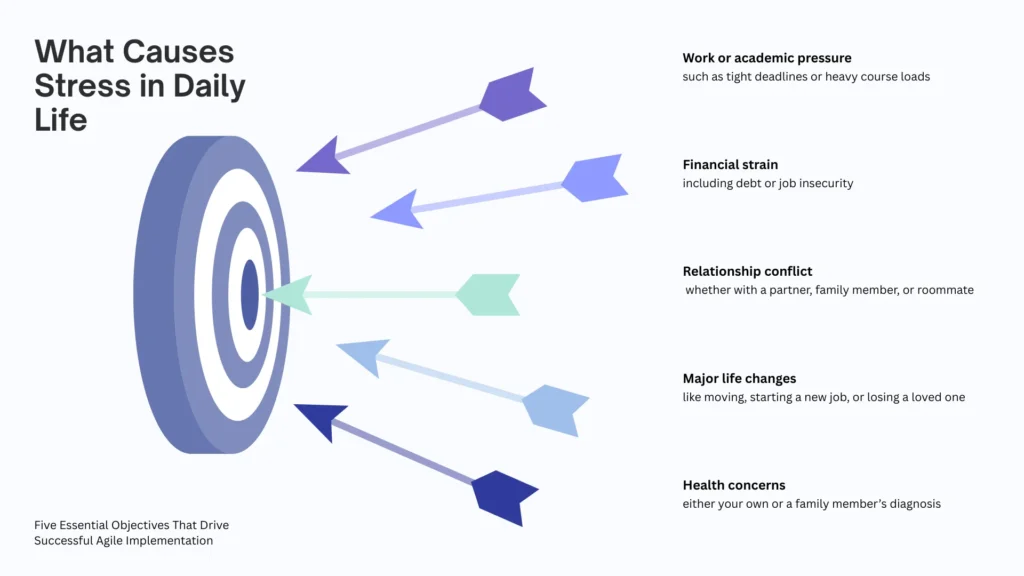
Distress builds when the pressure on you exceeds the resources you have to handle it. Five common causes include:
- Work or academic pressure, such as tight deadlines or heavy course loads
- Financial strain, including debt or job insecurity
- Relationship conflict, whether with a partner, family member, or roommate
- Major life changes, like moving, starting a new job, or losing a loved one
- Health concerns, either your own or a family member’s diagnosis
The Occupational Safety and Health Administration reports that 83% of U.S. workers experience work-related stress, making the workplace one of the most common sources of chronic strain among adults. Support tied to job searches, internships, and workplace transitions, such as career services, often eases this specific type of pressure before it becomes chronic.
Common Signs and Symptoms of Stress
Stress shows up in your body, emotions, and behavior at the same time.
- Physical symptoms: Headaches, muscle tension, fatigue, upset stomach, and a racing heart are common.
- Emotional symptoms: Irritability, anxiety, sadness, and a short temper often surface first.
- Behavioral symptoms: Trouble concentrating, procrastination, and reaching for alcohol, food, or your phone to numb out signal deeper strain.
- Cognitive symptoms: Racing thoughts, memory lapses, and difficulty making decisions point to mental overload.
- Sleep-related symptoms: Trouble falling asleep, waking up frequently, or oversleeping all disrupt your recovery.
- Social symptoms: Withdrawing from friends, canceling plans, and avoiding conversations often follow prolonged stress.
Catching these signs early gives you the chance to act before stress compounds into something harder to manage.
How to Identify Your Personal Stress Triggers
Stress management starts with naming your specific stressors, not stress in general. Keep a short stress journal for one week. Each time you feel stressed, write down what caused it, how your body felt, how you reacted, and what actually helped. Patterns emerge fast. You might discover that your Sunday-night dread comes from an unfinished to-do list, not from the week ahead itself.
Apply the 4 As of Stress Management
Every stressful situation falls into one of four categories. Match your response to the category, and you save energy you’d otherwise waste fighting a battle you can’t win.
Avoid Unnecessary Stress
Cut out stressors you have real control over. Learn to say no to requests that overload your schedule. Limit time with people who consistently drain you. Trim your to-do list down to what matters this week.
Alter the Situation
Change what you can influence. Voice your concerns directly instead of bottling them up. Negotiate deadlines before they become emergencies. Set clearer boundaries with coworkers, classmates, or family members.
Adapt Your Response
Reframe stressors you can’t remove. Ask whether the issue will matter in a month or a year. Lower your standard from “perfect” to “good enough” on tasks that don’t demand perfection.
Accept What You Cannot Change
Some stressors, like a national economic downturn or a loved one’s illness, sit outside your control. Redirect your energy toward your own reaction instead of the unchangeable circumstance.
15 Effective Stress Management Techniques
Combine three or four of these techniques rather than attempting all fifteen at once.
1. Exercise
Physical activity releases endorphins that lift your mood within minutes. A brisk walk, a swim, or 20 minutes of cycling all work equally well. You don’t need an athletic background; even short bursts of movement spread across your day add up.
2. Deep Breathing
Slow, controlled breathing calms your nervous system and lowers your heart rate almost immediately. It shifts your body out of fight-or-flight mode and back into a resting state. Practicing it for even one minute during a stressful moment can noticeably ease tension.
3. Meditation
Ten minutes of daily guided or silent meditation quiets racing thoughts and lowers cortisol over time. Regular practice trains your brain to notice stress earlier, before it builds into overwhelm. Free apps and short YouTube sessions make it easy to start without any prior experience.
4. Consistent Sleep
Seven to nine hours of sleep nightly restores the mental and physical resources stress depletes. Poor sleep also lowers your tolerance for daily hassles, so small annoyances start to feel bigger. A fixed bedtime and wake time, even on weekends, strengthens this effect.
5. Balanced Nutrition
Fruits, vegetables, and whole grains stabilize your energy, while cutting back on caffeine and sugar prevents mood crashes. Skipping meals under pressure often backfires, since low blood sugar mimics and amplifies stress symptoms. A steady eating schedule keeps both your energy and your mood more predictable.
6. Time Management
Ranking tasks by priority and breaking large projects into smaller steps reduces the feeling of being overwhelmed. Tackling your hardest task earliest in the day, while your focus is sharpest, prevents it from looming over everything else. Academic advising can also help map out a manageable course load before deadlines stack up.
7. Social Connection
Calling a friend, joining a club, or confiding in a mentor buffers you against stress and shortens recovery time. Face-to-face contact, even briefly, triggers hormones that counteract your body’s stress response. You don’t need a large circle; one or two people who listen well make a measurable difference.
8. Yoga
Practicing yoga two to three times a week combines physical movement with breath control and mental focus. The slower, more accessible styles, such as Hatha yoga, work especially well for beginners. Many students find that a 20-minute home session fits more easily into a packed schedule than a full class.
9. Journaling
Five minutes of unfiltered writing before bed releases pent-up feelings without judgment. You don’t need to write well or make sense; the goal is to get the thoughts out of your head and onto paper. The same reflective habit, applied to coursework, is the kind of skill a writing center helps students strengthen.
10. Time in Nature
Even a 20-minute walk in a park measurably lowers stress hormones and improves concentration. Green spaces reduce mental fatigue faster than indoor rest in several studies. If a park isn’t nearby, tending a houseplant or sitting near a window with natural light offers a smaller version of the same benefit.
11. Boundary-Setting
Saying no and delegating tasks prevents you from carrying every responsibility alone. Clear boundaries protect your time without requiring conflict; a simple, direct “I can’t take that on right now” is usually enough. Over time, consistent boundaries also earn you more respect from others, not less.
12. Humor
A comedy, a funny podcast, or time with friends who make you laugh interrupts the stress response. Laughing lowers stress hormones and increases oxygen flow within seconds. Keeping a short list of shows or people that reliably make you laugh gives you a quick option on hard days.
13. Creative Hobbies
Drawing, playing music, or gardening shift your focus away from stressors and toward something you enjoy. These activities absorb your attention fully, which briefly interrupts the mental loop of worry. Choosing a hobby with a physical, tactile element tends to work better for stress relief than passive screen time.
14. Limited Social Media Use
Cutting back on scrolling reduces the comparison and news exposure that raise anxiety. Setting a specific time limit, rather than trying to quit entirely, tends to be easier to sustain. Many people notice a calmer mood within just a few days of cutting their usage in half.
15. Gratitude Practice
Naming three things you appreciate each day keeps setbacks in perspective. The practice works best when you get specific, such as naming a particular conversation rather than a vague “good day.” Over several weeks, this habit is linked to lower stress and better sleep quality.
3 Structured Techniques Worth Learning in Depth
Beyond the 15 daily habits above, three techniques come with a specific, research-backed method. Learning the exact steps makes them far more effective than a vague attempt at “breathing deeply” or “relaxing.”
Box Breathing
Box breathing is a structured technique used by clinicians and military training programs to calm the nervous system fast.
- Inhale through your nose for four counts.
- Hold your breath for four counts.
- Exhale through your mouth for four counts.
- Hold the empty breath for four counts, then repeat for four cycles.
Progressive Muscle Relaxation
Progressive muscle relaxation (PMR) trains your body to recognize the difference between tension and relaxation.
- Sit or lie down in a quiet space.
- Tense one muscle group, such as your fists, for five seconds.
- Release the tension suddenly and notice the contrast.
- Move through each muscle group, from your feet to your face, over 10 to 15 minutes.
Mindfulness-Based Stress Reduction
Mindfulness-Based Stress Reduction (MBSR) is an eight-week structured program, developed at the University of Massachusetts Medical School, that combines meditation, body awareness, and yoga. Clinical trials link MBSR to measurable drops in cortisol and improved emotional regulation, making it one of the few stress techniques with a standardized, research-backed curriculum. You can find MBSR through certified instructors or accredited online courses.
Stress Management Techniques at a Glance
Use this quick-reference table to match a technique to the time you actually have available.
| Technique | Time Required | Best For |
| Box breathing | 1–2 minutes | Acute stress, in-the-moment panic |
| Deep breathing | 1–5 minutes | Quick reset during a busy day |
| Gratitude practice | 2 minutes | Shifting perspective before bed |
| Journaling | 5 minutes | Releasing pent-up emotions |
| Meditation | 10 minutes | Lowering cortisol over time |
| Progressive muscle relaxation | 10–15 minutes | Physical tension, trouble sleeping |
| Exercise | 20–30 minutes | Boosting mood, burning off adrenaline |
| Time in nature | 20 minutes | Mental fatigue, low concentration |
| Yoga | 20–30 minutes | Combining movement with breath control |
| MBSR program | 8 weeks | Building a long-term, structured practice |
Use your senses to interrupt the stress response fast when you need relief right now.
- Take one slow, deep breath through your nose and exhale twice as long through your mouth.
- Hold or smell something calming, such as a favorite scent or a warm drink.
- Play one song that instantly lifts your energy or calms your nerves.
- Step outside for two minutes and notice five things you can see, hear, or feel.
How to Replace Unhealthy Coping Habits with Healthy Ones
A 2024 APA-Statista survey found that 55% of U.S. adults lost patience or yelled at a family member due to stress, and 50% skipped exercise as a result. Watch for these unhealthy patterns:
- Using alcohol or drugs to relax
- Bingeing on comfort food
- Withdrawing from friends and family
- Zoning out on your phone for hours
- Sleeping far more than your body needs
- Procrastinating on the tasks causing your stress
Swap any pattern you recognize for a healthier alternative from the 15 techniques above. Replacing a late-night scrolling session with a short walk compounds into real change over a few weeks.
Barriers to Building Resilience
Some circumstances make stress management harder through no fault of your own: a long-term health condition, discrimination, financial hardship, poor access to healthcare, or distance from your support network. Facing these barriers isn’t a personal failing. It means you may need extra support, such as a counselor, a peer group, or the kind of guidance offered through student affairs, to build resilience alongside the techniques above.
When to Seek Professional Help for Stress
Self-help strategies solve most everyday stress, but certain signs call for a licensed therapist or counselor:
- You rely increasingly on alcohol, drugs, or other unhealthy habits to cope.
- Stress disrupts your sleep, appetite, or concentration at work or school.
- You feel persistently overwhelmed, anxious, or withdrawn from people you care about
- Physical symptoms like headaches or chest tightness continue despite self-care
The National Institute of Mental Health notes that chronic, unmanaged stress raises the risk of developing an anxiety disorder. This condition affects roughly 19% of U.S. adults in any given year. A mental health professional can pinpoint hidden stressors and build a coping plan suited to your specific situation, going beyond what generic self-help techniques cover.
Managing Stress as a Student: How Charisma University Helps
Academic life adds its own layer of stress: exams, coursework, and the pressure to balance study with work or family. Stress and resilience frameworks like the ones covered in this guide sit at the core of graduate study in the School of Psychology, where research-backed models such as MBSR and the 4 As apply directly to clinical and behavioral practice. Wellbeing resources, academic advising, and the campus support center all support students through the transition into graduate or undergraduate study, regardless of major. Further reading on managing academic and personal stress is published regularly on the Insights page.
Frequently Asked Questions
Box breathing, four counts in and four counts out, activates your parasympathetic nervous system within about a minute.
Start with three or four that fit your daily routine, then add more once they become habits.
Yes. Moderate, short-term stress sharpens focus and motivates you to meet deadlines and challenges.
83%, according to OSHA data, making the workplace one of the leading sources of chronic stress for adults.
When it disrupts your sleep, relationships, or daily functioning for several weeks or longer, at which point a licensed professional can help.
Avoid, alter, accept, and adapt are the four core responses; you match your response to whichever category the stressor falls into.
Name three things you see, three sounds you hear, and move three parts of your body; this grounding technique interrupts a spiraling stress response within seconds.
Yes. Even 20 minutes of moderate activity measurably lowers cortisol and releases endorphins, making it one of the fastest-acting techniques on this list.
Stress usually fades once the trigger passes, while anxiety persists even without a clear cause; anxiety that lasts most days for six months or longer typically warrants a professional evaluation.