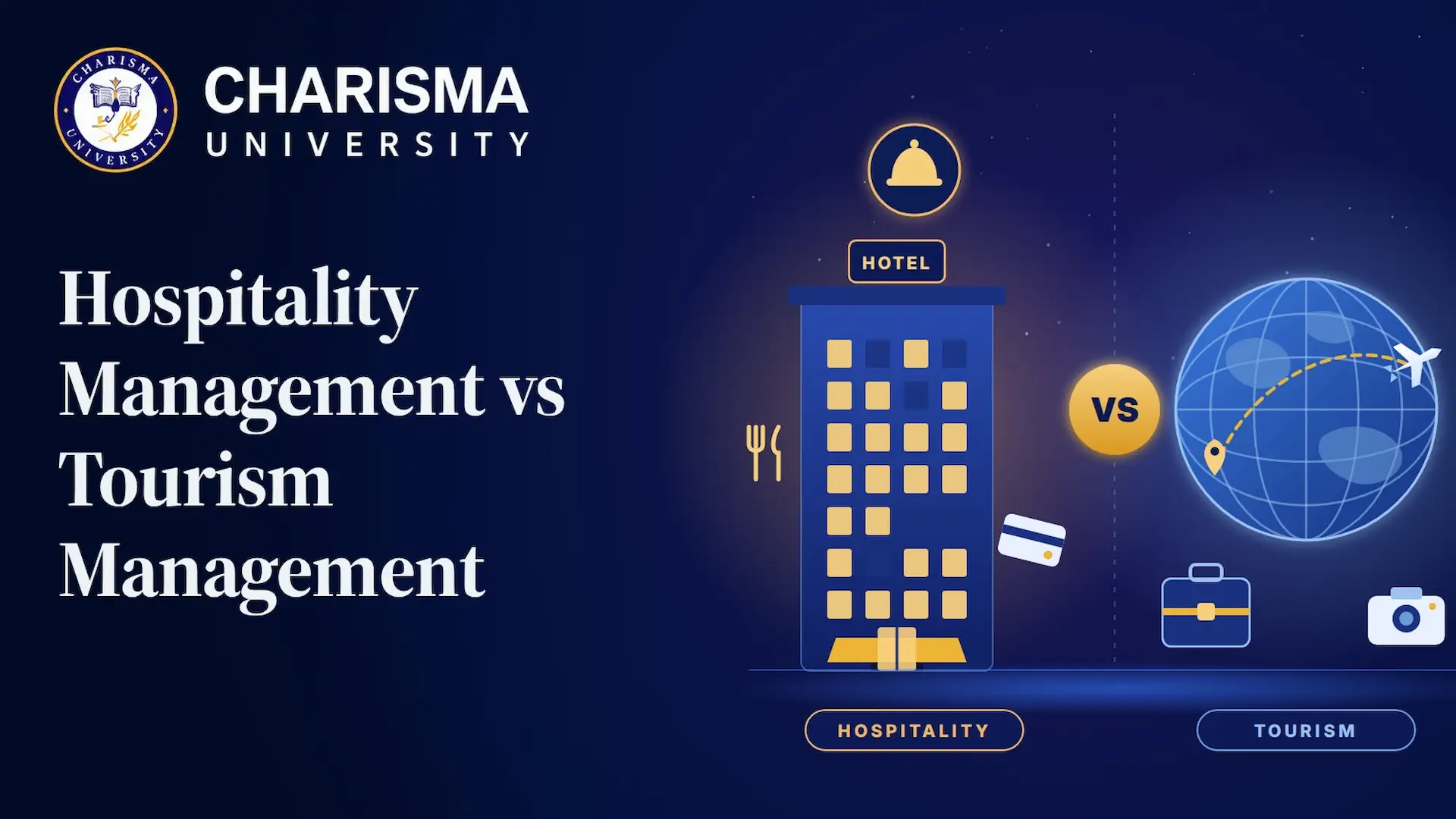
Tourism and hospitality management is the study of running businesses that serve travelers and guests. This includes hotels in New York, resorts in Miami, theme parks in Orlando, and cruise terminals in Seattle. It is one of the fastest-growing fields in the USA and around the world.
In this guide you will learn how the two sides differ, what you study, what jobs it leads to, and why the USA is a great place to build this career.
What Is Tourism and Hospitality Management?
Tourism and hospitality management mixes business, service, and people skills. Look at each side to understand it better.
Tourism helps people travel. It covers trips for fun, culture, adventure, business, and wellness. It includes eco-tourism along the Pacific Coast and cultural tours in Chicago, New Orleans, and Washington, D.C. According to Wikipedia’s overview of tourism, it is one of the world’s biggest economic sectors. It affects transport, hotels, food, and entertainment.
Hospitality management serves people once they arrive. It covers hotels, resorts, restaurants, event venues, casinos, cruise lines, and spas. The goal is to give guests a great stay while keeping the business running well. The Wikipedia definition of hospitality management calls it a field that blends business skills with service delivery.
Together, they train people to lead organizations that make travel worth taking. This starts when a guest books a trip. It ends when they check out.
Tourism vs. Hospitality: The 2 Core Distinctions
Many people use these terms the same way. But they do different things. Here is a clear side-by-side comparison:
| Tourism | Hospitality | |
| Focus | Moving and attracting visitors | Serving visitors once they arrive |
| Core question | How do we bring people here? | How do we give every guest a great stay? |
| Key areas | Destination marketing, travel planning, tour operations, tourism policy | Hotel operations, restaurants, event spaces, spas, resorts |
| Who hires you | Tourism boards, travel agencies, government, tour operators | Hotels, resorts, restaurants, casinos, cruise lines |
| Examples in the USA | U.S. Travel Association programs, national park visitor services, wine country tours | Marriott properties in New York, restaurants in Nashville, resorts in Hawaii |
The two sides overlap a lot. A resort general manager in Napa Valley or the Florida Keys handles both. They run the hotel. They also create cultural tours and local events for guests. Most degree programs today combine both fields.
Why Tourism and Hospitality Management Matters in the USA
The USA Leads Global Tourism
The USA is one of the top tourism spots in the world. Travel generates $2.3 trillion in economic output each year. The U.S. Travel Association reports that the industry supports over 15 million jobs across the country. It also brings in hundreds of billions in tax revenue each year.
The Industry Keeps Growing
The U.S. hospitality sector adds tens of thousands of new jobs each year. The tourism scene is one of the most diverse in the world. It ranges from ski resorts in Colorado to beaches in Florida. It also covers tech conferences in Austin and film events in Los Angeles.
The Global Numbers Are Even Bigger
The World Travel and Tourism Council (WTTC) found that the industry added $11.1 trillion to the global economy in 2024. That is about 10% of all global GDP. The sector employed nearly 330 million people worldwide in 2024. By 2034, that number will reach 449 million. That is 12.2% of the entire global workforce.
Skilled Managers Are in High Demand
All this growth needs trained managers. Hotels, resorts, event companies, and tourism boards need people who know both the service side and the business side. A degree in tourism and hospitality management teaches exactly that Charisma University’s School of Business offers this degree.
The 7 Core Areas Tourism and Hospitality Management Covers
A solid program builds skills across these 7 key areas:
1. Hotel and Lodging Operations
Run a hotel from top to bottom. This covers front desk, housekeeping, maintenance, and brand standards. It includes boutique inns, full-service hotels, and large resort properties.
2. Food and Beverage Management
Manage restaurants, catering, banquets, and beverage programs. Food tourism draws millions of visitors to Nashville, New Orleans, and New York each year.
3. Event and Conference Management
Plan and run corporate events, weddings, trade shows, and conventions. The USA has some of the world’s biggest convention venues. These include McCormick Place in Chicago and the Las Vegas Convention Center.
4. Tourism Planning and Destination Marketing
Brand a destination and use digital tools to attract travelers. The Annals of Tourism Research lists destination marketing as one of the most in-demand skills for tourism managers. Students who add a Bachelor of Arts in Marketing build an even stronger base.
5. Strategic Marketing and Revenue Management
Set prices, fill rooms, and use online booking platforms. Revenue management is a well-paid role. It directly affects how much a hotel earns. A background in finance or economics helps here.
6. Human Resource Management for Service Industries
Hire, train, and keep great staff. Hospitality relies on people. Building a strong service team is one of the most vital skills in this field. The Human Resource Management gives a clear path for students who want to focus here.
7. Sustainable Tourism and Responsible Hospitality
Reduce environmental impact and build tourism that helps local communities. The Journal of Sustainable Tourism lists sustainability as one of the top challenges for the next wave of hospitality leaders.
Key Skills You Develop as a Graduate
Graduates develop 8 skills that work across many industries, including leadership, customer service, financial literacy, marketing, communication, problem-solving, technology, and project coordination:
- Builds leadership and team management, leads diverse teams in fast-moving service environments.
- Improves customer service excellence, creates experiences that exceed guest expectations
- Develops financial literacy, reads budgets, controls costs, and manages revenue
- Enhances strategic marketing ability, attracts the right guests at the right price through the right channels
- Strengthens intercultural communication, works well with guests and staff from all over the world.
- Sharpens problem-solving under pressure, handles overbookings, supply issues, and service failures fast.
- Builds technology proficiency, uses property management systems (PMS) and customer relationship management (CRM) tools
- Improves project coordination, plans events, manages renovations, and runs seasonal programs.
10 In-Demand Career Paths After Graduating
Graduates work across 10 major sectors, including hotels and resorts, cruise lines, restaurants, casinos, theme parks, travel agencies, airlines, event companies, convention bureaus, and destination marketing organizations.
- Hotel General Manager runs all parts of a hotel, from the front office to housekeeping to food and beverage. Senior hotel GMs at full-service properties earn between $90,000 and $180,000 per year.
- Revenue Manager uses data and pricing tools to fill rooms at the best rate. This is one of the most well-paid roles in the field. A background in economics or finance is a strong asset.
- Event and Convention Manager plans and delivers conferences, weddings, and large corporate events. The convention industry in Las Vegas, Chicago, Orlando, and New York creates steady demand for this role.
- Food and Beverage Director manages all dining at a hotel, resort, or restaurant group. This covers menu design, kitchen management, and the full guest dining experience.
- Tourism Development Officer works for tourism boards or government agencies to attract visitors and build tourism programs. The U.S. Travel Association and state-level tourism offices hire for this role across the country.
- Travel and Tour Operations Manager handles travel programs, itineraries, and supplier deals for tour operators, travel agencies, or corporate travel teams.
- Casino Operations Manager runs gaming, hospitality, and entertainment at casino resorts. This is a major employer in Nevada, New Jersey, and across the American South.
- Cruise Line Operations Manager manages food, entertainment, and guest services on cruise ships. Many of these ships operate along the Gulf Coast and Atlantic seaboard.
- Spa and Wellness Director leads treatment programs and staff at resort spas or standalone wellness centers.
- Sustainability and ESG Manager is a fast-growing role. It focuses on green operations, environmental reporting, and sharing sustainability updates with guests and investors.
How It Compares to Related Degrees?
Vs. Business Administration
Business administration gives a broad base in finance, marketing, accounting, and strategy. Tourism and hospitality management applies those same skills to service businesses and guest experience. Many professionals later pursue a Bachelor of Business Administration to grow into wider leadership roles.
Vs. Marketing
Marketing is a key tool in hospitality. But a hospitality degree goes deeper. It adds operations, finance, HR, and service design. Students who enjoy the promotional side can add a Bachelor of Arts in Marketing on top of their hospitality base.
Vs. Healthcare Administration
Both fields use business and leadership skills in service-heavy settings. Students drawn to patient-centered service may find that Healthcare Administration shares a lot with hospitality’s focus on guest experience.
Vs. Public Administration
Government tourism agencies, national parks, and convention bureaus need public sector leadership skills. Students who want the policy side of tourism often find that a background in economics bridges tourism and government work.
What Courses Are Included in this Program?
A four-year bachelor’s degree covers core business topics and hands-on hospitality subjects. Most programs include:
- Principles of Hotel and Resort Management
- Food and Beverage Operations
- Tourism Marketing and Destination Management
- Revenue Management and Pricing Strategy
- Event Planning and Convention Management
- Hospitality Law and Ethics
- Human Resources for Service Industries
- Financial Accounting for Hospitality
- Sustainable Tourism and Responsible Operations
- Global Tourism Trends and Cultural Studies
- Internship or Practicum in Hospitality Operations
Many programs also include capstone projects and industry partnerships. A study in the International Journal of Hospitality Management found that students who completed structured internships got jobs faster and moved up more quickly than those who did not.
Online vs. On-Campus: Which Learning Format Works Best?
Both options have real value. The right one depends on your life and goals.
On-campus programs give you hands-on learning. You get training kitchens, front-desk practice, event spaces, and face time with industry guests. This works well for students coming straight from high school.
Online programs offer the same content with more freedom. This is ideal for people already working in hotels, restaurants, or travelling. They can earn a degree without leaving their job.
Is Tourism and Hospitality Management a Good Career Choice?
Yes. The numbers make a strong case.
The USA is one of the top tourism economies in the world. Travel generates $2.3 trillion in annual economic output. The industry employs over 15 million people. It also fills government budgets with hundreds of billions in tax revenue each year. From Colorado ski resorts to Orlando theme parks, from New Orleans culinary tourism to Manhattan convention hotels, jobs exist across the entire country.
The global hospitality market reached $4.99 trillion in 2024. It is on track to pass $6 trillion by 2028. Demand for skilled managers is rising fast. Supply is not keeping up.
Frequently Asked Questions
Tourism management attracts and moves visitors. It covers destination marketing, travel planning, tour operations, and tourism policy. Hospitality management serves visitors once they arrive. It covers hotels, restaurants, events, and guest experience. Most programs combine both.
A Bachelor of Arts in Hospitality and Tourism Management gives the strongest base. Many professionals then add a graduate degree for senior roles. Charisma University’s graduate programs offer that path.
Yes. The U.S. hospitality sector adds tens of thousands of new jobs each year. Management roles are in high demand in New York, Miami, Chicago, Las Vegas, and Nashville.
A bachelor’s degree takes about four years full-time. Transfer students in faster programs may finish sooner. A graduate degree adds one to two more years, depending on the school and pace.
Yes. Charisma University offers a fully online Bachelor of Arts in Hospitality and Tourism Management. It works well for professionals who want to move into management while they work.