Social Emotional Learning, often known as SEL, is the process of developing skills that help people understand emotions, build strong relationships, and make responsible decisions in everyday life. It shapes how we think, act, and connect with others.
Today, around 83% of schools are already using SEL programs, and the impact is clear. Students involved in SEL show an improvement of about 4.2 to 8.4% in academic performance, while large-scale studies covering over 400,000 students confirm better behaviour, emotional control, and learning outcomes.
The influence of SEL is also growing beyond classrooms, with the global market expected to expand from around 2 to 4 billion dollars in 2025 to more than 15 billion dollars in the coming years.
From its foundations and core competencies to real-world applications, implementation strategies, and future trends, SEL plays a key role in emotional intelligence, mental well-being, and long-term success in modern society.
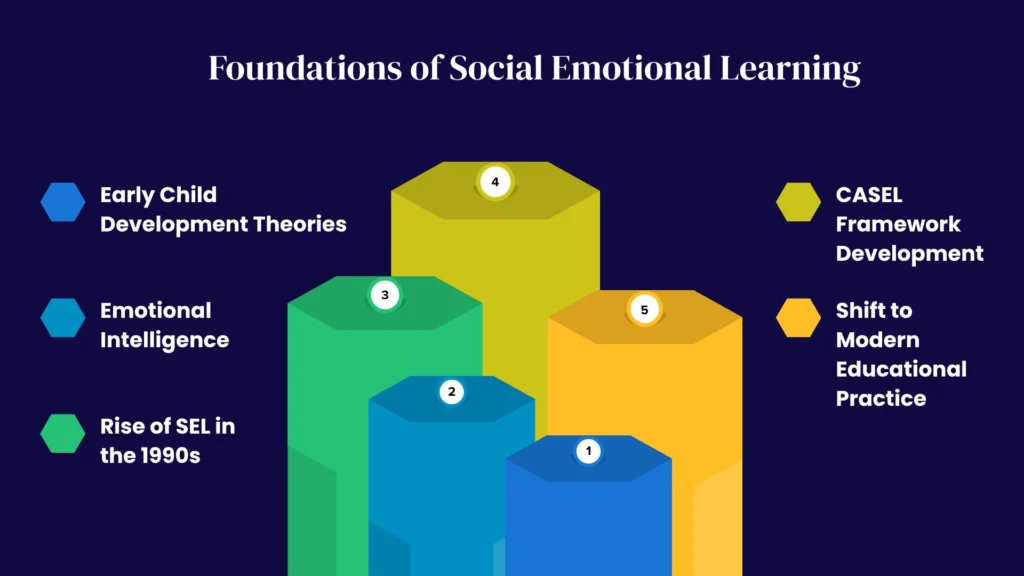
Foundations of Social Emotional Learning
Think about the moments when learning felt easiest. Chances are, you felt understood and connected. That is not a coincidence, because Social Emotional Learning grew from this exact realisation, emotions are not separate from learning, they are the reason it works.
Early Child Development Theories
Researchers like Jean Piaget, Lev Vygotsky, and Erik Erikson observed one clear pattern. Children who feel emotionally secure learn faster and behave better. Their work showed that attention, memory, and behaviour are strongly shaped by emotional safety.
Emotional Intelligence
Daniel Goleman brought emotional intelligence into the spotlight by arguing that managing emotions matters as much as intellect. He focused on skills like empathy, self-awareness, and social interaction, showing how these directly impact success in both personal and professional life.
Rise of SEL in the 1990s
By the 1990s, schools were facing more behavioural challenges and emotional struggles among students. Educators realised that focusing only on academics was not enough, leading to the development of structured approaches that included emotional and social skill building in everyday learning.
CASEL Framework Development
CASEL created a practical framework that defined five key competencies of SEL. This helped standardise how emotional skills are taught, giving schools a clear system to follow rather than relying on scattered or inconsistent approaches.
Shift to Modern Educational Practice
SEL gradually became part of daily teaching practices instead of being treated as an extra concept. Schools and training programs began embedding these skills into routines, recognising that emotional awareness and social understanding are essential for long-term success in real-life situations.
Importance of SEL in Modern Society
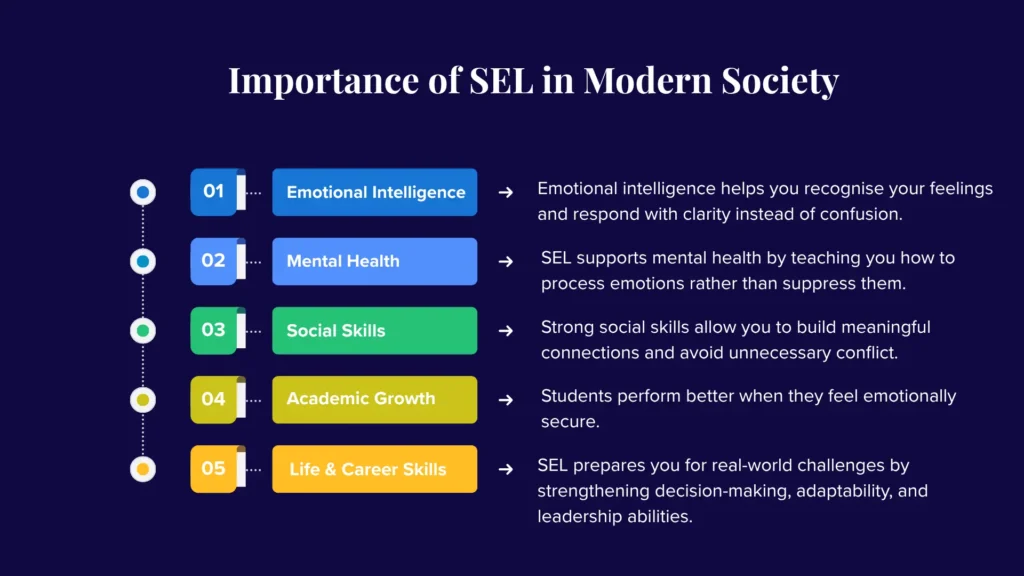
In a world where stress builds quickly and connections feel fragile, knowing how to handle emotions is no longer optional. Social-emotional learning quietly shapes how you think, react, and connect every single day, often in ways you do not even notice.
Emotional Intelligence
Emotional intelligence helps you recognise your feelings and respond with clarity instead of confusion. It strengthens self-control, improves communication, and allows you to handle pressure without losing focus, making everyday challenges easier to resolve effectively.
Mental Health
SEL supports mental health by teaching you how to process emotions rather than suppress them. It reduces anxiety and encourages healthier coping strategies, helping you stay balanced and stable even during stressful or uncertain situations.
Social Skills
Strong social skills allow you to build meaningful connections and avoid unnecessary conflict. SEL encourages empathy, active listening, and respectful communication, which improve relationships in every aspect of your daily life while creating a sense of belonging and trust.
Academic Growth
Students perform better when they feel emotionally secure. SEL improves concentration and reduces disruptive behaviour, allowing learners to engage more deeply with their studies and achieve stronger academic outcomes over time.
Life & Career Skills
SEL prepares you for real-world challenges by strengthening decision-making, adaptability, and leadership abilities. These skills help you overcome stress under pressure and build successful careers through better communication and problem-solving.
Understanding Social Emotional Learning
In everyday life, reactions often happen instantly, while understanding comes a moment later, revealing how much emotions influence behavioural decisions and relationships. That hidden gap between feeling and response is where social emotional learning quietly shapes how life unfolds.
Core SEL Skills
At the heart of social emotional learning are a few essential abilities that influence how people react, think and interact daily. These skills may seem simple on the surface, yet they quietly determine how situations are handled and relationships evolve.
| Skill | Meaning | Example |
| Emotional recognition | Identifying what you are feeling in the moment | Noticing tension building before reacting in frustration |
| Impulse control | Pausing before reacting to a situation | Choosing to stay silent instead of arguing instantly |
| Empathy | Seeing situations from another point of view | Understanding why someone reacted differently |
| Effective communication | Expressing thoughts clearly and respectfully | Explaining feelings without creating conflict |
| Thoughtful choices | Making decisions with awareness | Considering outcomes before taking action |
Core Competencies
There is a quiet difference between reacting to life and actually understanding what is happening within and around you. These competencies shape that difference, guiding how your emotions are processed, how people connect, and how decisions unfold in everyday situations.
- Self Awareness
Emotions do not always show up clearly. Sometimes they hide behind frustration, silence, or even confidence. Learning to recognise what is truly going on internally creates clarity that influences every thought and action moving forward.
- Recognising internal emotional states helps uncover what is actually driving reactions in different situations.
- Understanding personal values and beliefs allows decisions to align with what truly matters.
- Noticing shifts in mood and mindset helps prevent emotional confusion from affecting behaviour.
- Self Management
Feelings can rise quickly and without warning, but what truly matters is how those emotions are handled in the moment. This competency focuses on creating control without suppressing what is being felt internally.
- Regulating intense emotional impulses allows thoughtful responses instead of immediate reactions.
- Applying stress coping techniques helps maintain focus during challenging situations.
- Maintaining self-discipline and consistency supports progress even when motivation drops.
- Social Awareness
People communicate far more through tone, expressions, and behaviour than through words alone. Understanding these signals creates deeper connections and helps you understand social environments with awareness and sensitivity.
- Interpreting nonverbal cues helps understand what others may not openly express.
- Showing genuine empathy builds stronger and more meaningful connections.
- Appreciating cultural and social differences allows respectful interaction across diverse groups.
- Relationship Skills
Connections are built through small interactions repeated over time, often in ways people barely notice in the moment. The ability to communicate and respond effectively determines whether relationships grow stronger or slowly fall apart.
- Practising active listening ensures others feel heard and understood in conversations.
- Using clear verbal and nonverbal communication prevents misunderstandings and confusion.
- Managing conflict resolution strategies helps maintain healthy and respectful relationships.
- Responsible Decision Making
Every situation presents choices, but the quality of those choices depends on your awareness, reflection, and intention. Such a competency shapes how your decisions are made and how their outcomes are handled.
- Considering possible long-term consequences helps avoid impulsive and harmful decisions.
- Applying ethical reasoning ensures actions remain fair.
- Evaluating different problem-solving approaches leads to more effective and balanced outcomes.
Alternative SEL Models Beyond CASEL
Not every child connects with the same approach, and that is where things get interesting. Different minds respond to different methods, and sometimes the breakthrough happens when a new perspective clicks in a way the usual framework never could.
RULER Approach
Developed at Yale Centre for Emotional Intelligence, this model teaches you to understand, express and regulate your emotions. It strengthens emotional awareness, improves communication, and helps you make better decisions in both academic and real-life situations.
Positive Action Model
Created by Carol Allred, this model emphasises that positive thoughts lead to positive actions and outcomes. It builds self-worth by encouraging responsibility, helping you connect your behaviour with consequences, and reinforcing habits that lead to long-term success.
PATHS Program
Developed by Mark Greenberg and Carol Kusché, this program focuses on emotional understanding and self-control. It helps you identify emotions, manage impulses, and strengthen problem-solving skills, improving both behaviour and social interactions.
Second Step Program
Created by Committee for Children, this program focuses on empathy, emotional regulation, and conflict resolution. It teaches you how to respond thoughtfully and build positive relationships while addressing issues like bullying and peer conflict.
MindUP Framework
Founded by Goldie Hawn, this framework combines neuroscience with mindfulness practices. It helps you understand how your brain works and develop emotional awareness through breathing, reflection, and attention-building exercises.
SEL Implementation Strategies
You can have the best SEL theory in the world, but without the right approach, it falls flat in real life. The real result happens when these ideas are actually lived, practised, and woven into everyday experiences in a meaningful way.
Training
Teachers and facilitators need proper guidance before teaching SEL. This includes workshops, ongoing coaching, and practical exercises. When educators understand emotional skills themselves, they can model them effectively and make lessons more impactful for learners.
Integration
SEL works best when blended into everyday learning instead of being treated as a separate subject. It can be naturally included in discussions, group work, and problem-solving activities, helping students apply emotional skills alongside academic learning in real time.
Environment
A supportive environment makes SEL effective. Classrooms and workplaces should feel safe, respectful, and open. When people feel heard and valued, they are more likely to express emotions and engage fully in learning.
Tools
Practical tools make SEL easier to apply. These include journaling, reflection prompts, group activities, and digital resources. Such tools help individuals recognise emotions, track progress, and practice skills consistently in everyday situations.
Collaboration
SEL becomes stronger when everyone is involved. Teachers, parents, and communities need to work together to reinforce the same values. Consistent support across different environments helps individuals develop emotional skills more deeply.
SEL for Different Age Groups
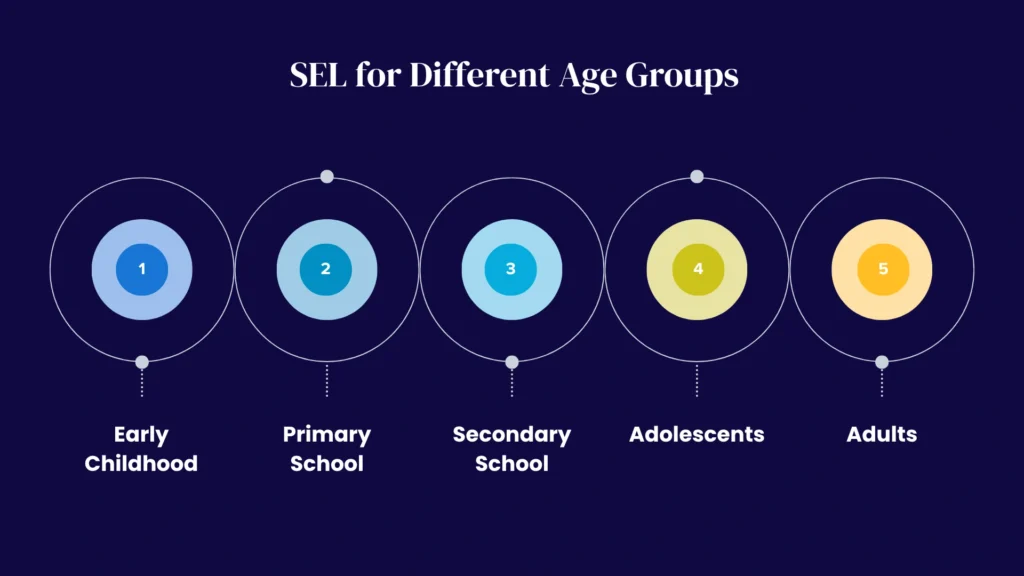
Emotions do not wait for the right age. From a child learning to share to an adult handling pressure, every stage of life brings emotional challenges that shape decisions, relationships, and growth in ways we often underestimate.
Early Childhood
Children begin recognising basic emotions like happiness, anger, and fear. They learn sharing, listening, and expressing feelings through simple interactions. Guidance at this stage builds emotional safety and the foundation for empathy later in life.
Primary School
At this stage, children develop deeper social understanding. Children learn to share, listen and express feelings through simple interactions. Guidance at this stage builds emotional safety and creates a strong base for empathy that continues to shape behaviour and relationships as they grow older.
Secondary School
Students face identity questions and stronger emotions. Students learn to manage peer pressure and understand consequences. SEL supports decision making, emotional control, and healthier social interactions during a time of rapid personal change.
Adolescents
Adolescents experience intense emotions and increasing independence. SEL helps them navigate relationships, stress, and personal identity. Adolescents build critical thinking, along with emotional resilience and stronger decision-making skills, preparing them for adulthood and long-term responsibilities.
Adults
Adults use SEL to manage workplace stress, communicate effectively, and build strong relationships. It supports leadership, emotional balance, and conflict resolution. These skills improve productivity and the ability to adapt in complex situations.
Real-Life Examples of SEL in Action
In quiet everyday moments, emotions rise, and choices follow, shaping interactions in ways that often go unnoticed. These subtle responses reflect deeper social and emotional abilities that influence behaviour and the ability to overcome challenges with control.
Classrooms
Students practice active listening during group discussions, manage frustration during challenging tasks, and resolve conflicts respectfully. Teachers guide and encourage teamwork by creating safe spaces where students feel comfortable sharing thoughts without fear of judgment.
Home
Family members model emotional awareness by expressing feelings openly and listening without interrupting. Parents guide children through disagreements calmly, teach empathy through everyday situations, and encourage honest communication to discourage lies and deception.
Workplace
In professional settings, SEL helps employees stay composed under pressure and collaborate effectively with colleagues. Leaders who practice empathy make better decisions and inspire teams. Strong emotional awareness improves productivity and reduces unnecessary workplace conflicts.
Community
Communities benefit from SEL when individuals show empathy and respect toward others. People engage in meaningful conversations, resolve differences peacefully, and support one another. Creating safer environments encourages a sense of belonging among diverse groups.
Daily Life
Every day situations constantly test emotional control and awareness. From handling criticism to staying patient in stressful moments, SEL helps you respond thoughtfully. These small actions improve personal well-being and lead to healthier interactions in all aspects of life.
Benefits and limitations of Social Emotional Learning
You have probably seen it happen, someone becomes calmer and better at handling life, and it feels powerful to be in control, but then you ask a question, “Is it always effective? Does it work for everyone, or are there hidden trade-offs worth understanding first?”
| Benefits | Limitations |
| Improves emotional intelligence | Requires time to implement |
| Enhances academic performance | Needs trained educators |
| Reduces behavioural issues | Not always standardised |
| Builds strong relationships | Cultural differences may affect results |
| Supports mental health | Can be misunderstood as non-academic |
Like most powerful approaches, Social Emotional Learning is not perfect, but it offers meaningful value when applied thoughtfully. Understanding both its strengths and its limits allows you to use it wisely rather than expecting it to solve every challenge on its own.
Future of Social Emotional Learning
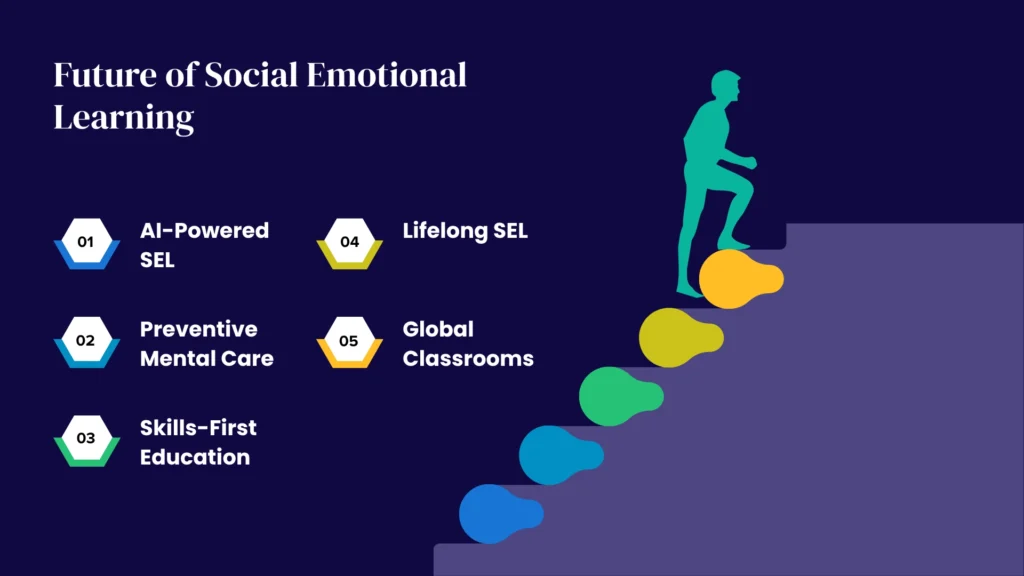
The world is changing faster than ever, and emotional strength is quietly becoming just as important as knowledge. As pressures rise and connections grow more complex, the way we understand and teach emotions is also evolving in powerful ways.
AI-Powered SEL
Technology is beginning to personalise emotional learning in ways never seen before. Smart tools can track emotional patterns and offer real-time guidance. These systems help individuals build awareness, practice regulation, and receive feedback that feels tailored to their personal experiences.
Preventive Mental Care
Early emotional education is shifting toward prevention instead of reaction. By teaching coping skills at a young age, people are better prepared to handle stress before it escalates. This approach reduces long-term mental health challenges and supports stronger emotional resilience.
Skills-First Education
Education systems are gradually focusing more on real-life skills than memorisation. Emotional intelligence, communication, and adaptability are becoming central priorities. These abilities prepare you to solve problems and succeed in environments that demand.
Lifelong SEL
Learning emotional skills is no longer limited to childhood or school years. Adults are increasingly embracing these tools for personal growth and professional success. Continuous development of emotional awareness helps people adapt to life changes and maintain meaningful relationships over time.
Global Classrooms
Classrooms across the world are adopting emotional learning in ways that respect cultural differences. Educators are adapting methods to fit diverse communities while keeping core principles intact. This global shift promotes empathy, inclusion, and shared understanding among people from different backgrounds.
Traditional education focuses mainly on academic knowledge, while SEL develops emotional intelligence, social behaviour, and life skills needed for real-world success.
SEL can be measured through behavioural observations, self-assessments, and feedback, although accurately evaluating emotional growth can still be challenging.
SEL can be adapted across cultures, but it must align with local values and traditions to ensure it remains meaningful and effective.
Results vary, but positive changes in behaviour, emotional control, and relationships can often be seen within a few months of consistent practice.
Not really, SEL supports academic learning by improving focus, behaviour, and emotional stability, which ultimately helps students perform better in school.